Friday, April 23, 2021

Four smart investments physicians should consider in 2021

Four smart investments physicians should consider in 2021


One good method of saving and earning is through investing. Here are four options you can look into.

In terms of finances, physicians don't exactly have it easy. On average, medical school debt amounts to around $215,900. And that excludes education-related debt accrued before entering medical school. Once medical students go on to become full-fledged doctors, they can expect to shell out between $365,000 and $440,000 for loan repayment — that's around $165,000-$240,000 solely from interest.

Additionally, the average salary of new doctors is around $53,100. Trying to budget that between daily needs, bills, and student debt is a precarious balancing act, to say the least. That's why physicians need to be smart in their financial decisions. One good method of saving and earning is through investing. Here are four options you can consider:


High-yield savings accounts


High-yield savings accounts are recommended for physicians who aren't willing to take too many risks in their investments. Just like any savings account, you deposit your capital in a bank, usually an online bank, and let your wealth grow over time. While regular savings accounts only offer an average of 0.04% annual percentage yield (APY), high-yield variants can amount to as much as 0.6% APY. The only downside is that you can't readily withdraw your money from ATMs as you'll need to transfer the money to your main bank account first.


Certificates of Deposit (CDs)


CDs are another low-risk investment option. They're issued at banks and require you to deposit a lump sum for a set amount of time, without withdrawing from it. The time period can range from several weeks to years, giving you flexibility in your choice. Note that the longer the time period, the higher the APY. For instance, 1-year CD rates go up to as much as 0.6% APY, while 3-year CD rates are much higher at around 1% APY. When opting for this investment, just make sure you won't be needing your deposited cash anytime soon.


Exchange-Traded Funds (ETFs)


In contrast to the first two options, ETFs are for investors who are willing to take on some level of risk (and, in return, higher rewards). ETFs are a type of security that tracks assets. There are various types available, and each can hold multiple underlying assets, such as bonds, commodities, or currencies.

If you're looking for a relatively safer ETF option, it’s important to know that there is also a means to invest in gold — a well-known safe-haven investment. Gold ETFs allow you to invest in gold without having to acquire it physically. Some of the top gold ETFs include the SPDR Gold Trust ETF (GLD) and the iShares Gold Trust (IAU). Both of the firms handling these ETFs deal in physical gold, as opposed to mining shares or futures. GLD is the largest fund that invests in gold, while IAU is the low-cost option. They're most useful during economic downturns since the value of gold tends to go up when the economy is struggling.


Stocks


Moving on to the riskiest investment of the four, investing in stocks or equities involve buying part of a corporation, which gives you the right to a margin of that corporation's profits.

You can choose to invest in healthcare corporations to help in furthering their research. One promising stock option is Guardant Health (GH), a company working on a next-generation diagnostic test for cancer patients. Alternatively, you could stick to the popular bets, like Walt Disney (DIS) and PayPal (PYPL), both of which are going strong after the boost in users during the pandemic. Just remember to do your research before purchasing stocks to ensure that the corporation you're investing in will prove profitable in the long run.

It might be difficult to earn your keep as a physician, but remember that there are other avenues to earn money. Making the right investments can help you save up now and achieve financial freedom in the future. For some tips on crafting your investment strategy, check out our article on smart investing. It discusses the importance of a financial plan and the benefits of talking to a certified financial planner.


15% Off Medical Practice Supplies


VIEW ALL


Manual Prescription Pad (Large - Yellow)


Manual Prescription Pad (Large - Pink)

Manual Prescription Pads (Bright Orange)

Manual Prescription Pads (Light Pink)

Manual Prescription Pads (Light Yellow)

Manual Prescription Pad (Large - Blue)

Manual Prescription Pad (Large - White)


VIEW ALL


Thursday, April 22, 2021

Expert tips to create a concierge-style patient experience

Do you still think of your medical call center as a necessary evil? You’re not alone. Without visibility to the levers that could improve cost efficiency, most practices consider their call centers primarily as a cost center. But in healthcare’s current landscape, where patients view practices through the lens of a consumer, your call center should function as a true value addition.


With consumer-driven business models running the show, your existing call-handling systems and protocols are likely not contributing to the patient loyalty you need for a thriving practice. Ask yourself if the following sounds a little too much like your patients’ experience.


Please Hold


There she stands. A long-time patient of your practice. With a list of friends and relatives that hang on her every word. You’ve just started to review her information to get her ready for the procedure she has scheduled for today.

And then the phone rings.


Even if you wouldn’t consider telling her, “Excuse me just a minute while I answer that,” you are now distracted. You know it. And she knows it.

To compound the problem, that call is from one of your practice’s VIPs. Perhaps a school athletic director needing to schedule pre-season checkups for her 20-member team. Or a member of your practice’s board of directors. But you’ll never know because that call went to voicemail.

This is not the concierge-style experience your patients expect.


Walking the Tightrope


If your practice is like most, staff members are constantly balancing the needs of callers with those of the patients standing in front of them. The experience of callers outside the practice walls is just as important as what happens face to face. Many negative Google and Healthgrades reviews have more to do with a poor experience on the phone than the level of care they received. The question is, “how do I ensure that patients on both sides of the wall receive a concierge experience?”


Do This, Not That


Practices often miss the mark on customer service for several reasons. On the people side, a lack of customer service training, poor documentation of previous patient communications, and a lack of clearly stated departmental roles and responsibilities contribute to errors. Combining that with systems that can’t audit patient communications, outdated hardware that’s vulnerable to outages, EHR software that doesn’t track communications, and reliance on voicemail makes it difficult for your team to ensure they are providing the patient experience you intended.

Take a look at a few best practices for overcoming these problems and making patient-pleasing service happen:

  • Ensure calls are being handled by well-trained staff members that are not also responsible for in-person patients who are at the clinic.
  • Document every patient interaction in your EHR for reference in future interactions.
  • Dig deep for effective ways to replace voicemail with patient-friendly alternatives.
  • Implement a best in class patient engagement solution that offers features such as:
    • Caller ID recognition and priority routing.
    • Voice AI for call routing.
    • Queue callback rather than waiting on hold.
    • Multiple communications channels such as text and webchat in addition to calling.

While too many communications options can lead to frustration and confusion for patients, too few options mean more callers just press 0 and wait for someone to talk to. This often results in callers that just hang up or disappear down the voicemail tunnel.

Regardless of the combination of protocols and technology your practice chooses, make sure the mix is focused on making it easy for patients to interact with you.


Rising to the Challenge


Your practice is becoming a mix of existing and new patients with one thing in common: they’ve all been charmed by the bells and whistles of consumer businesses. And the better job those companies do of delivering superstar customer experiences, the higher the bar is set for your practice. Investing in the kind of access patients expect can no longer be considered a sunk cost. High functioning patient engagement solutions, layered with great technology, help create the memorable patient experiences that encourage the loyalty and referrals you need to drive profitability.


15% Off Medical Practice Supplies


VIEW ALL


Manual Prescription Pad (Large - Yellow)

Manual Prescription Pad (Large - Pink)
Manual Prescription Pads (Bright Orange)
Manual Prescription Pads (Light Pink)

Manual Prescription Pads (Light Yellow)
Manual Prescription Pad (Large - Blue)
Manual Prescription Pad (Large - White)


VIEW ALL


Wednesday, April 21, 2021

Doctor-patient communication’s role in mitigating medical malpractice claims

 
As an independent medical malpractice insurance broker, medical malpractice claims are a common topic of conversation with my physician clients. I have heard many stories from doctors dealing with the threat of a lawsuit, ranging from the comically baseless to the likely merited. From all the stories I have heard, I’ve been able to discern a common theme: communication matters. And poor communication may be perceived or actual. From lack of follow-up to inadequate bedside manner, time and again some type of poor communication is the root cause of my clients’ malpractice woes, while the clients who prioritize correspondence with their patients enjoy better outcomes. Their anecdotal experiences coupled with study data has shown that physicians who practice thorough, almost relentless patient communication reduce their chances of being hit with a medical malpractice claim.


In some ways, communication with patients needs to be unyielding, even if they’re ignoring you. Take the case of one of my surgeon clients: a year ago, one of her patients received a general surgical procedure which resulted in a good outcome. The patient reported some pain afterwards but skipped the follow-up appointment and communication ceased. A year passed, then out of nowhere my client’s practice received a bad review on Google from the same patient who missed her follow-up appointment. In her review, she complained that the pain she reported hadn’t been taken seriously and described my client as a terrible surgeon with such shoddy surgical skills that she had to seek out a neurosurgeon. A day later, the review was deleted, leading my client to believe she would soon be facing a medical malpractice suit.

The truth was that that patient’s surgical plan called for a second round of surgery from a neurosurgeon all along; in fact, my client was the person who referred the patient to the neurosurgeon. And even though it was the patient who missed the follow-up appointment, my client was now dealing with the aftermath of the perceived neglect.

Could my client have done anything to avoid this?

Unfair as it might seem, had my client reached out when the patient missed her follow-up appointment, it could have avoided the threat of this lawsuit.

One of my orthopedic surgeon clients had a claim that cost nearly $100,000 to defend, and it could have been avoided with better communication. After a total knee replacement (TKR) with no complication, the patient went home and healing began. The surgeon’s nurse called to check on the patient the next week but couldn’t reach anyone, and the patient never came back for a follow-up. Meanwhile, the patient was experiencing an infection from the incision which worsened. The patient ended up going to the ER and eventually filed a lawsuit against the surgeon. Had the patient answered the calls post-op, this infection could have been prevented, and a malpractice insurance claim avoided. What more could the surgeon and nurse have done? Had the surgeon’s practice collected multiple points of contact for the patient, such as a friend, family member, or caretaker, then contact might have been made. If he had stressed to the patient the importance of the follow-up then it’s possible the patient would have made it a priority.

Studies have found that certain doctors are sued more than others. Physicians that have a history of medical malpractice claims share these common characteristics, as reported by patients: long waits to be seen, but the appointment was rushed; the doctor did not fully explain their care to them; and they did not feel heard or treated with respect. Poor overall communication is the most common complaint against doctors that are sued the most often.

According to the New York Times, a plethora of studies over the last thirty years have shown that physicians who use humor in their care spend more time educating patients about their health and “try to get their patients to talk and express their opinions” are sued less often.

When you consider my clients’ stories in light of this information, it becomes apparent that if they had done just a bit more follow-up, made one more phone call to check in on the patient, spent a little more time discussing the diagnosis, or made the patient feel heard, then a medical malpractice claim may have been avoided.

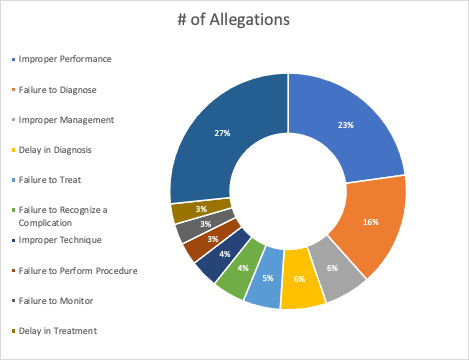
Medical malpractice data shows us that bad patient-provider communication correlates with medical malpractice claims. Data compiled from the National Practitioner's Data Bank (NPDB) in the chart below shows the most common medical malpractice allegations made against doctors in 2019. Two reasons that appear in the top 10 are Delay in Diagnosis and Failure to Monitor, both of which can be the result of poor doctor-patient communication.


Source: NPDB


The NPDB reports that in 2019, 491 Delay in Diagnosis claims resulted in a total payout of $254,685,400 and 220 Failure to Monitor claims received a total payout of $88,793,500.

It’s probably obvious that good communication is important for a “bedside manner” that makes patients feel at ease, cared for, and unlikely to sue you, but it's not always easy for physicians to achieve, especially those in private practice. Paperwork, packed schedules and compliance requirements leave many offices and doctors overwhelmed and with little time for extraneous patient follow-ups.

Still, improving communication might be the difference that prevents a doctor from being sued, even in cases after a medical error has occurred. A study in the Western Journal of Medicine found that when doctors took the time to explain why a medical error occurred, took time to listen to their patient’s feelings about it, validate them, and discuss what efforts would be made to improve safety going forward, patients reported higher rates of satisfaction and trust. In cases of hospital care, they were also more likely to leave the physician out of the lawsuit.

One practical thing a physician can do right now to improve their communication and mitigate the risk of a malpractice claim is to increase their practice’s follow-up efforts with patients and other healthcare providers. In the case of my client, the general surgeon, if she would have reached out to the patient again after the missed follow-up appointment, she may have been able to explain that attending the follow-up was the best course of action to help her solve her pain issue.


A great example of robust follow-up comes from one of my neurosurgeon clients. He has a practice protocol in place to follow all of his major surgical patients for seven years post-procedure, touching base at least once a year to make sure they're not experiencing any new pain or to schedule a follow up if they are. And while not a regulation or requirement of any kind, this follow-up process plays a large part in helping his practice manage malpractice risk.

Yes, there is a cost associated with creating a comprehensive follow-up communication policy, even if you are paying a nurse or practice assistant to perform the outreach for you. It saves your practice money in the long run by reducing your malpractice risk and increasing patient satisfaction. This level of care can also help you get outstanding reviews on Google, Yelp, and physician-centered platforms. Additionally, physicians that collaborate with other health care providers can develop professional relationships and increase natural referrals, bringing even more financial gains to the practice.

The threat of a medical malpractice claim can loom large and impact every aspect of your life. Though many claims made against physicians are unfounded and go nowhere, avoiding one altogether will help your peace of mind and bottom line. By employing a communication style that consists of adamant follow-ups, thorough explanations, and making sure your patients feel heard, you will reduce your likelihood of a medical malpractice lawsuit and provide a healthier, happier experience for everyone involved.


References


Carroll, Aaron. “To Be Sued Less, Doctors Should Consider Talking to Patients More” New York Times, 25 Sept. 2014, www.nytimes.com/2015/06/02/upshot/to-be-sued-less-doctors-should-talk-to-patients-more.html.

“Physician bedside manner linked to malpractice suit” Relias Media, 1 May. 1997, www.reliasmedia.com/articles/48843-physician-bedside-manner-linked-to-malpractice-suit
Levinson, Wendy et al. “Physician-Patient Communication:

The Relationship With Malpractice Claims Among Primary Care Physicians and Surgeons” Journal of American Medicine, vol. 277, no. 7, 19 Feb. 1997, pp. 553-559. JAMA Network, doi:10.1001/jama.1997.03540310051034. Accessed 19 Jan. 2021.

Sloan, Frank et al. “Medical Malpractice Experience of Physicians:

Predictable or Haphazard?” Journal of American Medicine, vol. 262, no. 23, 15 Dec. 1989, pp. 3291-3297. JAMA Network, doi:10.1001/jama.1989.03430230076029. Accessed 19 Jan. 2021.

Bovbjerg, Randall et al. “The Relationship Between Physicians' Malpractice Claims History and Later Claims

Does the Past Predict the Future?” Journal of American Medicine, vol. 272, no. 18, 9 Nov. 1994, pp. 1421-1426. JAMA Network, doi:10.1001/jama.1994.03520180045033. Accessed 19 Jan. 2021.
Moore, Phillip et al. Medical Malpractice

The Effect of Doctor-Patient Relations on Medical Patient Perceptions and Malpractice Intentions” Western Journal of Medicine, vol. 173, no. 4, Oct. 2000, pp. 244-250. PubMed Central, doi: 10.1136/ewjm.173.4.244. Accessed 19 Jan. 2021.

Hickson, Gerald et al. Physician Practice Behavior and Litigation Risk: Evidence and Opportunity” Clinical Obstetrics and Gynecology, vol. 51, no. 4, Dec. 2008, pp. 688-699. doi: 10.1097/GRF.0b013e3181899c2c. Accessed 19 Jan. 2021.


15% Off Medical Practice Supplies


VIEW ALL


Manual Prescription Pad (Large - Yellow)


Manual Prescription Pad (Large - Pink)

Manual Prescription Pads (Bright Orange)

Manual Prescription Pads (Light Pink)

Manual Prescription Pads (Light Yellow)

Manual Prescription Pad (Large - Blue)

Manual Prescription Pad (Large - White)


VIEW ALL