Christopher Berman, MD, and Zinon Pappas, MD, are physicians with The Centers for Advanced Orthopaedics in Frederick, Md., who work with NP Jay Madan, CRNP, and find a great deal of value in the relationship.
“There are multiple benefits to using a nurse practitioner,” Berman says. “Jay really serves as a physician extender. Working with him allows us to extend our span of care beyond just the patients we can see personally. Jay works with us to learn our practice style and preferences, and then implements our treatment plans, monitors our patients in follow up and also accepts new patients and makes independent clinical decisions.”
Berman feels that working with his NP creates a true synergy, which benefits the patients he sees. He says that the modern healthcare environment, with decreasing reimbursements and increasing regulatory compliance issues, has prompted all physicians to work more efficiently. Plus, the movement toward value-based care has given patients a greater voice in assessing quality, and has placed greater demands on physicians’ time.
“A well-trained nurse practitioner can extend the doctor’s care, allowing him to deliver more services in the same time period,” he says. “By having our NP take on some of the more routine tasks of patient follow ups, it frees up the doctor to perform more tasks that require their level of skill and training such as epidurals, EMGs [electromyography], and other procedures. Obviously, the specifics vary by practice and specialty but the concept holds.”
Different practices, different job duties
While all practices and MD/NP teams are different, many of the services NPs provide are the same, such as helping with routine physical exams, conducting examinations, and performing musculoskeletal screening. All of this can be done without supervision from the doctors.
Some, however get to go above and beyond the routine.
For example, Pappas notes, Madan evaluates patients with new injuries and problems, and prescribes various therapies to support recovery. “We have developed treatment protocols to help standardize our overall approach to patient care,” he says. “Of course, as a clinical professional, he does have autonomy and is encouraged to use his own clinical judgement.”
Thomas Davis, MD, FAAFP, a primary care physician for more than three decades in St. Louis, Mo., brought in his first NP in 2000 to help deal with a busy practice. The NP developed her own following of patients to the point where she essentially had her own practice.
“She was a former emergency room nurse, so when heart attacks, amputations, and the like walked through the door of my little rural clinic, she was at my side stabilizing and resuscitating,” he says. “An NP can serve as a safety valve for your day-to day-practice. They can take your overflow if you fall behind or have to spend time dealing with a particularly difficulty patient.”
Davis used his NP for diabetes education, medication self-administration education, and gynecologic screening for patients who prefer a female provider. “I have taught her a wide range of procedures and gave her free rein to learn whatever other services she was interested in,” he says. “As patients are increasingly self-segregating based on gender, a female NP can broaden the appeal of your practice and help you keep female patients that would otherwise seek their care elsewhere.”
The bottom line
Pappas notes from a cost perspective, having an NP on staff is a win-win for any practice. Since the NP is a highly-trained clinical professional, he or she can perform many of the same functions as a physician but at a much lower cost.
“This cost difference allows our nurse practitioner to support the practice by performing some of the services that are routine and which carry lower reimbursement like physical exams, while remaining a cost-effective use of his time,” he says. “Yet his advanced training and our team workflow allows him to also take on more clinically challenging matter as well.”
Davis warns that because of the freedom doctors offer NPs, malpractice is a significant risk, which is why physicians need to keep an eye on NPs appropriately-checking charts and communicating about cases-to keep liability costs down. “As a collaborating clinician, you will almost certainly be named if your NP is sued,” he says. “Most of the time, if your role with the patient in question was merely overseeing the NP, you’ll be dropped from the case if you can demonstrate regulatory compliance with your state’s collaboration laws.”
15% Off Medical Practice Supplies
VIEW ALL

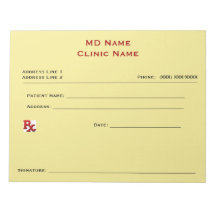
 Manual Prescription Pad (Large - Yellow)
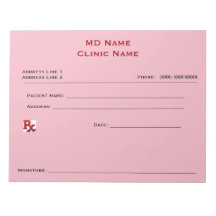 Manual Prescription Pad (Large - Pink)
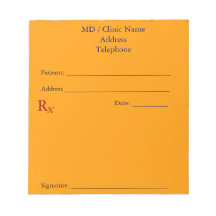 Manual Prescription Pads (Bright Orange)
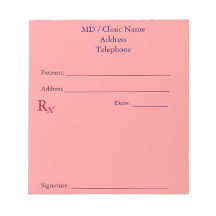 Manual Prescription Pads (Light Pink)
 Manual Prescription Pads (Light Yellow)
 Manual Prescription Pad (Large - Blue)
__________________________________________________
Appointment Reminder Cards
$44.05
15% Off
$56.30
15% Off
$44.05
15% Off
$44.05
15% Off
$56.30
15% Off


