Showing posts with label online marketing. Show all posts

Wednesday, May 24, 2023

Top 7 ways to increase your medical practice’s online presence

Online presence is more important now than it ever has been in the past. A recent study by PatientPop showed that 61% of patients search for doctors online, using a combination of reviews, provider listings, and individual business websites to choose their medical provider.

Ensuring your medical practice has an online presence is essential to keeping up with your competitors. In this article, we’ll review the top 7 ways to build your healthcare organization's online presence and best practices for maintaining high visibility to prospective patients.
What is online presence?

Online presence refers to the existence and visibility of an individual, organization, or brand on the internet. It is the digital footprint that a person or business has established through various online channels, including websites, social media platforms, online directories, and other digital media. An online presence can include content such as text, images, videos, and audio that is accessible via the internet.

Why is online presence important for healthcare marketing?

Having a strong online presence can help individuals and businesses to establish and maintain a positive reputation, reach a wider audience, and build relationships with customers or followers. It can also provide a means of communication and engagement with others in the digital world

A weak or negative online presence, on the other hand, can harm a person's or organization's reputation and hinder their ability to connect with others online. Managing and maintaining an online presence for a healthcare organization is essential for building trust in current and prospective patients, as well as other referring providers.


7 Ways to increase your healthcare organization's online presence


1. Build a professional website: A website is the foundation of your online presence. It is important to have a website that is professional, easy to navigate, and mobile-friendly. Include information about your organization, services you offer, locations you serve, and contact details. Make sure your website is optimized for search engines by using relevant keywords in your content, titles, and meta descriptions.

2. Optimize for search engines: SEO is the process of optimizing your website to rank higher in search engine results pages (SERPs). This can be achieved through various techniques, such as optimizing your practice or clinic’s website content, using relevant keywords, and building high-quality backlinks. By improving your practice’s SEO performance, your information is more likely to be found by potential patients who are searching for healthcare services.

3. Claim and optimize online directories: Online directories are platforms that list information about businesses, including healthcare entities. Claim and optimize your organization’s profiles on directories that list healthcare organizations by region and by specialty. This can help to increase visibility and attract new patients who are searching for healthcare services in your area.The top online directories for healthcare organizations are:Google My Business
Healthgrades
Zocdoc
WebMD
Yelp
Vitals

4. Use social media: Social media platforms such as Facebook, Twitter, and Instagram can be powerful tools for engaging with patients and promoting your healthcare organization. Share informative content, interact with patients, and use paid advertising to reach a wider audience. Social media can also help to build relationships with patients and establish your practice as a trusted healthcare provider.

5. Create and share quality content: Creating and sharing quality content can help to establish your organization as an authority in your field and attract new patients. This can include clinical blog posts, infographics, videos, and other types of informative content that are relevant to your specialty and offered services. Share this content on your website and social media channels.

6. Encourage patient reviews: Positive patient reviews on platforms such as Google and Yelp can help to boost your practice's online reputation and attract new patients. Encourage patients to leave reviews by providing excellent care and customer service. Respond to all reviews, whether positive or negative, to show that you value patient feedback and are attentive to your patients’ needs.

7. Use online advertising: Pay-per-click (PPC) advertising, such as Google Ads and Facebook Ads, can be a cost-effective way to reach a targeted audience and promote your practice. Use relevant keywords and demographic targeting to reach potential patients who are searching for healthcare services in your area.

By implementing these strategies, you can increase your medical practice's online presence, attract new patients, and establish your practice as a trusted and reputable healthcare provider.
Maintain a healthy online presence

Once you’ve built your initial online presence, a certain amount of effort is required to maintain it. Here are some best practices for keeping your online presence up-to-date and effective:Regularly update your website: Make sure your website is always up-to-date with accurate information about your organization, the medical services you offer, and your contact details. Regularly add new content, such as blog posts or news updates that are relevant to your specialty. This will keep your website fresh and engaging.

Engage with patients on social media: Stay active on social media by responding to patient comments and messages, sharing informative content, and engaging with your followers. This can help to build relationships with patients and establish your organization as a trusted healthcare resource.
Monitor online reviews: Monitor and respond to online reviews on platforms such as Google, Yelp, and Healthgrades. Always respond to reviews, whether they’re negative or positive, to show patients you are attentive and committed to providing high-quality care.

Regularly post quality content: Creating and sharing quality content, such as blog posts, videos, and infographics, can help to establish your practice as an authority in your field and attract new patients. Post virtual versions of the handouts you would typically give to patients in-office to encourage engagement and patient education.

Stay up-to-date with industry news: Stay informed about industry news and trends by subscribing to relevant publications and attending conferences and events. This can help you to stay ahead of the curve and provide the best possible care to your patients.

Continuously monitor and improve your SEO: Continuously monitor and improve your website's SEO to ensure that you are ranking well in search engine results pages. This can include optimizing your website's content, building high-quality backlinks, and monitoring your website's analytics to identify areas for improvement. While there are numerous tools to track and monitor SEO performance, a quick Google search of ‘your specialty in your city’ can give you a fast and free glance at how you rank in that SERP.

By following these best practices, you can maintain a strong online presence for your healthcare organization, attract new patients, and establish yourself as a trusted source for healthcare in your community.


Create a process for managing online presence


Creating and managing a presence online can feel like a daunting task, especially if you do not feel well-acquainted with the digital world. However, like any other task in your organization, maintaining your online profile can be broken down into a process.Define which areas your information exists online. Create a list of all entities, such as online directories, your website, and your social media accounts.

Assign a trusted staff member or supervisor to manage these accounts. Make sure they have administrator access to all accounts and are set up to receive notifications when reviews or comments are left.

Create a policy that ensures all reviews, comments, and questions are responded to within 48 business hours.

Bring negative comments, valid questions and concerns to ownership meetings. These comments and reviews can be very valuable for improving process flows

Set a quarterly budget for website updates and online advertising. Whether you are paying someone in-house or hiring an external company to manage your website, set aside a significant portion of your marketing budget that is dedicated to website updates.

Track your online performance. Use metrics like search engine rankings, website traffic (Google analytics is a helpful tool for this), social media followers and interactions, and web inquiries made from your website. Use this information to build on your digital marketing strategy for the future.
Integrate online presence as a part of your ongoing marketing budget

Maintaining a reputable presence online is essential to the overall marketing efforts of your healthcare organization. It is important to dedicate a portion of your marketing budget to the maintenance and growth of your online profiles.

By utilizing the methods mentioned above, you can greatly improve your visibility online and put your organization in front of prospective new patients and referring providers. This is a marketing technique that will help to grow your organization into the future.


15% Off Medical Practice Supplies


VIEW ALL


Manual Prescription Pad (Large - Yellow)


Manual Prescription Pad (Large - Pink)

Manual Prescription Pads (Bright Orange)

Manual Prescription Pads (Light Pink)

Manual Prescription Pads (Light Yellow)

Manual Prescription Pad (Large - Blue)

Manual Prescription Pad (Large - White)


VIEW ALL

Saturday, October 23, 2021

Avoid the spam folder when sending healthcare email marketing

HIPAA compliant email marketing can improve patient outcomes, set you up as a leader in your field, boost your brand, and grow your business. And as we’ve previously covered for Physicians Practice, personalized email marketing is even more powerful.

But what good are your email marketing campaigns if patients never see them? Luckily there are some general tips you can follow to avoid the spam folder.


Obey the CAN-SPAM Act


The first step is to obey the CAN SPAM Act which sets a national standard for the regulation of spam email. The Federal Trade Commission (FTC), Bureau of Consumer Protection has provided a CAN SPAM Act compliance guidewhich summarizes the ruling.

In a nutshell, all email marketers including those in the healthcare field must:
Provide the option to unsubscribe
Provide your physical address
Accurately identify the business that is sending the email in the email header
Include a subject line that briefly explains the email contents
If it’s an advertisement, identify the message as such


Ways that your email ends up in the spam folder


There are two ways that your email can end up going to the spam folder: either spam filters send it to the spam folder directly, or a recipient tags your email as spam themselves. Once enough people do this, your spam score will increase, and eventually your emails will start going to the spam folder before anyone has a chance to read them.


We’ll explain how you can avoid both scenarios below.


Remove bounced email addresses

Hard email bounces are the result of an invalid, closed, or non-existent email address, and these emails will never be successfully delivered. Bounce rates are one of the key factors internet service providers (ISPs) use to determine an email sender’s reputation, so having too many hard bounces can cause your emails to no longer arrive in patients’ inboxes.


Ask subscribers to add you to their address book


Most spam filters allow recipients to whitelist a sender by adding it to their address book. You can recommend that your recipients do just that.


Don’t use a no-reply email address


Certain ISPs, network spam filters, and patients’ personal email security settings are set up to send no-reply email addresses to the junk folder. Also, most ISPs do not allow email recipients to add no-reply emails to their address books.


Don’t use an overwhelming number of images, or huge images


Using one large image as your entire email, or too many images in general tends to send an email to the spam folder.

You’ll also want to make your image file sizes as small as possible without losing their visual integrity to prevent long email load times.


Don’t use ALL CAPS


Some people consider all caps spammy. Instead of using annoying tactics to get people’s attention, try personalizing your emails, establishing relevancy, and using catchy language.


Don’t use exclamation points!!!!!


Another thing that can make your subject line or email look unprofessional is exclamation points. And since 69% of email recipients report email as spam based solely on the subject line, you’ll want to stay away from red flags like this as much as you can.


Don’t use spam trigger words


A good rule of thumb is this: If it sounds like something a used car salesman would say, it’s probably a spam trigger word. Think “free,” “guarantee,” no obligation,” and so on.


Don’t embed forms


Forms aren’t supported across common email clients due to security risks. Instead, include a link to a landing page with a HIPAA compliant contact form in the body of your email.


Use standard font sizes and colors


Using a red font or using invisible text (white font on top of a white background) is a common trick that spammers use. And besides, people don’t like it when marketers use irregular fonts, font sizes, or font colors in emails.


Check your spelling


Spelling mistakes aren’t just unprofessional, they’re also a trigger for spam filters and for people marking your email as spam.


Create different types of campaigns


Healthcare email marketing can take many different forms. An email campaign can provide educational messaging (i.e., summer skincare tips), promotional messaging (i.e., six Botox sessions for the price of five), seasonal greetings (i.e., Happy New Year!), or be in the form of a monthly newsletter.

Serving up different types of content will engage and inform patients, keeping them interested in your emails.


Use email segmentation


Every campaign you create won’t apply to every patient, so use email segmentation to tailor messages to the correct audience.


Keep it short and sweet


Too much copy is another red flag for spam filters. Not only that, but people generally prefer concise emails.

If you must write a lengthier email, break it up into multiple paragraphs. Giving visual breaks and composing the email with a clear introduction, middle, and conclusion will make it much easier for your reader.


Hit the right frequency


Fifty percent of people prefer to communicate with brands by email. However, 45% say sending emails too often is the number one reason they unsubscribe from mailing lists.

You don’t want to overload inboxes but reaching out too infrequently can also hurt your cause. There isn’t a one-size-fits-all formula, so take the time to figure out what works for your healthcare practice.


Conclusion


HIPAA compliant email marketing can help you grow your business and improve patient outcomes. But crafting an email that avoids spam filters and that patients want to read takes time and practice.

Using the guidelines above to write effective email campaigns, the sky is the limit on what you can communicate to patients.


15% Off Medical Practice Supplies


VIEW ALL


Manual Prescription Pad (Large - Yellow)


Manual Prescription Pad (Large - Pink)

Manual Prescription Pads (Bright Orange)

Manual Prescription Pads (Light Pink)

Manual Prescription Pads (Light Yellow)

Manual Prescription Pad (Large - Blue)

Manual Prescription Pad (Large - White)


VIEW ALL

Tuesday, September 14, 2021

Tips for improving your medical practice's online reputation

If you’re like most healthcare practitioners, you have probably realized the importance of online reputation and how it can make or break your practice.


When patients find a practice with overwhelmingly positive reviews, there’s a good chance that it will end up in a phone call or visit.

When it comes to healthcare, many people value the quality of care more than the affordability of the service. According to a recent Patient Experience Survey by Software Advice, more than 40% of consumers are willing to go out of their insurance network for a practitioner with positive reviews.


4 Tips on How to Manage Your Practice’s Online Reputation


1. Evaluate Your Current Reputation


You can’t fix something if you don’t know what you’re working with. Take a step back and assess your current reputation by checking what people have been saying about you.

Doing so is as simple as searching for your practice and checking relevant review platforms such as Yelp, RateMDs, Healthgrades, Vitals, or Angie’s List. By visiting these websites, you’ll gain a lot of valuable information that will shape your online reputation management strategy.


2. Launch Your Website


A website is one of the most effective marketing tools for healthcare practitioners to manage their online reputation.

First, you have control over the information that goes into your website, which means that you can highlight the positives of your practice. Second, a website is usually the first point of contact for many of your potential patients. If you’re managing your site properly, you can make an excellent first impression on your visitors and appear more professional and trustworthy.


3. Mind Your Social Media Presence


Social media isn’t just a powerful tool for managing your online reputation but also for proactively engaging potential and current patients. Physicians all over the U.S. have used social media platforms such as Facebook and Twitter to combat misinformation—not just about their practices but healthcare information in general.

Thus, you should take the time to create social media accounts that are relevant to your practice - Doximity, LinkedIn, Twitter, and Facebook, just to name a few. Creating robust social media accounts has been proven effective in managing online reputation.


4. Respond to All Reviews


For physicians who are doing well, online reviews are excellent for attracting new patients. On the other hand, dealing with negative reviews is a public relations nightmare.

This is a difficult issue to navigate but can be solved by simply allowing yourself to take a step back and designate someone to respond to online reviews. After all, it’s hard not to be emotional when dealing with negative comments.

Make sure you’re not responding to the review with any information that would compromise patient privacy protection. This includes not mentioning any details about the patient’s case.

Whether it’s positive or negative reviews, designate someone to respond to all of them. This approach won’t only help you manage negative reviews and not make the situation worse, but will also show that you’re listening to patients’ concerns and addressing them professionally.


Options to dispute negative or incorrect reviews?


Many search engines have a process for disputing a review and requesting it be removed. In most cases if you can prove that the review was left in error, the review site will take the review down. For instance, if someone reference their experience getting a mammogram, and you don’t offer that, then explain in your dispute report that it isn’t a service you offer. Or, if the reviewer references someone who’s not on your staff, be sure to provide those details in your dispute with the review site.

In addition, if a patient makes erroneous claims, such a malpractice without proof, there is a good chance you can get the review taken down for libel. Be sure to follow the process with the third party review site to report the review and request removal.


15% Off Medical Practice Supplies


VIEW ALL


Manual Prescription Pad (Large - Yellow)

Manual Prescription Pad (Large - Pink)
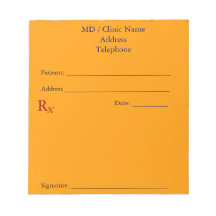
Manual Prescription Pads (Bright Orange)
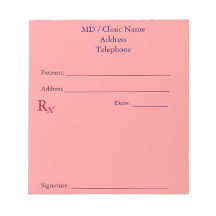
Manual Prescription Pads (Light Pink)

Manual Prescription Pads (Light Yellow)
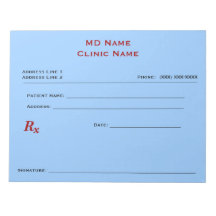
Manual Prescription Pad (Large - Blue)
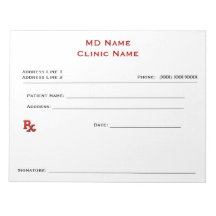
Manual Prescription Pad (Large - White)


VIEW ALL