Friday, October 7, 2022

3 Tools to optimize patient engagement in private practice

With all the pressures on physician time these days, it’s no wonder some doctors struggle to engage patients fully in their medical care, overall health and future well-being. Patient engagement efforts compete with all the other essentials of private practice — being efficient without sacrificing quality, protecting patient privacy, running a successful business and more.

Adopting the right technology can help allocate or reallocate time from physicians and staff to focus on patient engagement and satisfaction. Three tools in particular — self-scheduling, waiting room kiosks and offering a text-to-pay option — can boost engagement and increase time spent directly interacting with patients.

This evolution toward mobile capability also could be good for business. Patients will seek out a new doctor who will make a better fit with factors such as the use of modern technology contributing to their overall experience, according to the recent ModMed survey, 2022 Patient Experience Report.1

Our patients are tech-savvy. But I was surprised at how much people really wanted more technology in their interactions with a private practice. For example, 61% of survey respondents place importance on being able to make online appointments. *

The satisfaction of self-scheduling


People like to be in charge of their health care decisions, starting with how they schedule appointments. Offering patients this technology can save them time on the telephone with your front office staff, going back and forth on finding a time that works for both the patient and practice.

When patients choose their own appointment times, it frees up practice staff time. This allows staff an opportunity to engage patients in other ways. Front desk employees can spend more time supporting patients — ensuring patients understand any tests that need to be completed or procedures that need to be scheduled. I’m a gastroenterologist, and we treat patients who require medication adjustments for chronic conditions like ulcerative colitis or Crohn’s disease. We also perform screening procedures like endoscopies and colonoscopies that require careful preparation. Taking staff off mundane tasks like scheduling gives them more time to educate patients and answer questions about how to prepare for a colonoscopy. While giving patients electronic or paper handouts describing how to take a colonoscopy prep may be adequate, nothing replaces the opportunity to speak with patients face to face to answer questions and address any fears or concerns they may have. These opportunities to engage patients can result in higher patient compliance and better outcomes.

In addition, taking staff members off tasks that patients can handle themselves can free them up to focus on tasks like prior authorizations, which may otherwise cause delays in patients receiving medications or treatment. Securing prior authorizations can be a big headache for many private practices. It’s also a hassle for patients, who sometimes have to wait for one, two, three or more days to receive their prescribed medication.

A not-so-fond farewell to paper forms


Almost half, 48%, of people responding to the survey said they would prefer email, text or an online portal over a phone call to make appointments.

Handing patients an iPad to enter their information versus a clipboard with five sheets of paper can boost engagement. Patients may appreciate that their data is stored, and when they come back for a subsequent appointment, they can update the information but do not need to repeat the whole paper process.

This digital tool can decrease the paper burden for everyone, patients and practice staff alike.

Staff also no longer have to be experts at deciphering handwriting. Information entered digitally is much clearer, contributing to greater efficiency.


Reminders that could reap more revenue


In an ideal world, patients pay 100% of their financial responsibility for a visit before or during their time in your office. But how can technology help when that’s not the case?

Private practices have used digital reminders for a long time, primarily around scheduling and to decrease no-shows. Some practices even text patients to remind them they have a balance they owe.

Text-to-pay technology takes reminders to the next level, and 40% of patients surveyed prefer to make payments online or via text, autopay or payment apps after an in-person doctor visit. So, many patients like the convenience of paying their financial responsibility on a mobile device.

Patients also can be texted to remind them to prepare for a procedure, check on their symptoms or report their recovery status. It’s about enhancing communication with patients using automation. The aim is to reduce office visits and the need for hospitalizations going forward, all with the overall goal of improving outcomes. Hearing from patients in a timely way is essential to this strategy.

A technology assist


Although the right technology can save physicians and staff valuable time, it does not entirely replace the human factor in healthcare.

The report also revealed what motivates some patients to move on and find another provider or practice. For example, 67% of patients polled placed importance on how personable and engaged a doctor is when considering staying with the same doctor.

There remains a lot of pressure on physicians to be as efficient as possible. Colonoscopies, for example, can generate a lot of revenue for a practice. So a balance must be struck between performing multiple procedures on the same day and not losing sight of the importance of bedside interaction with patients.

Screening a healthy person with no family history or other risk factors for colon cancer can require less counseling and discussion compared to someone else with comorbidities. That means the healthier person could be in and out of the procedure area more quickly, interacting less with the physician and staff. That presents a challenge in terms of maximizing engagement with the patient.

Doctors can still look patients in the eye, say hello and address any questions or concerns before starting a procedure. It’s about being personable. If technology can add to efficiencies along the way, it can free up the whole process to become more patient-centered, which can boost patient engagement with your practice.

Hopefully, practices will be able to use more advanced technology to make even deeper connections with patients in the future.


1. Statistics referenced from ModMedⓇ 2022 Patient Experience Report: What Patients Really Think

*Data reflected is a combined stat of “very important” and “somewhat important” or “very likely” and “somewhat likely” to the generally used terms “important” or “likely,” respectively.


15% Off Medical Practice Supplies


VIEW ALL


Manual Prescription Pad (Large - Yellow)


Manual Prescription Pad (Large - Pink)

Manual Prescription Pads (Bright Orange)

Manual Prescription Pads (Light Pink)

Manual Prescription Pads (Light Yellow)

Manual Prescription Pad (Large - Blue)

Manual Prescription Pad (Large - White)


VIEW ALL

Thursday, October 6, 2022

Challenges physicians usually face with the medical billing processes

The shifting procedures and regulations in the medical billing processes in the healthcare industry has led to scores of physicians undergoing financial crises. However, when you know what the challenges are, it becomes easy to tackle them, right? Let’s glance through the common and real-time challenges faced by the physicians with the medical billing processes, shall we?

Specialty billing process: if you want to reap the benefits of the medical practices, it is crucial to stay afloat with the changes which take place. Medical specialty specific billing requires special handling, authorization and pre-certification to carry out the complex tasks. Such specialized and focused medical billing processes also require knowledge, to streamline the process and gain faster reimbursements. However, not all physicians have that much amount of time and knowledge to keep up with the changes and dive in-depth with the detailed process. Absence of knowledge leads to nothing but errors in claims, resulting in denials.

Changing confidentiality laws: HIPAA Laws have been created to protect the privacy and data of the patients, which needs to be adhered to by the healthcare settings. However, these confidentiality laws are subject to constant change which leads to heavy penalties in case not met properly. Physicians fail to keep a track of the changing confidentiality laws which loops them in deep-trouble.

Coding errors: As per the Becker’s Hospital Review, 80% of the medical bills have errors. Medical settings are making a shift towards computer-assisted-coding ; however, there is still scope for humans to make errors. Such typos lead to the claim denials. Thus, it is advised to the physicians to onboard people with years of expertise or simply outsource the medical billing process.

Poor employee training: The understanding of the digital documentation is very significant for a medical coder to ensure a smooth billing process. However, a lot of medical settings fail to renew their professional credentials and train their staff with the latest updates, which creates a loophole in the entire medical billing system.

Poor tracking claims: This is one of the most faced challenges by the physicians in the medical billing processes. The revenue management cycle requires the claims to be tracked through its complete lifecycle, thus the medical coders and billers need to pinpoint the errors. In case these errors are not resolved rapidly, it leads to loss in revenue.


Complicated revenue collection process: To gauge an understanding of the new coverage policy, the payers require an ample amount of time. This leads to confusion, resulting in denial of claims due to minor errors, complicating the entire process for the medical billing system.

Administrative load: As per the Cincinnati Enquirer, over 411,000 seniors have faced double-billing for their medical billing. This happens because physicians undergo a lot of stress in the medical settings due to the nature of the profession they have. Apart from taking care of patients, they need to play a role in the administrative duties, which just adds to the bucketload of stress. It is not easy to ensure smooth patient care along with the documentation process, because the latter demands staying abreast of the changes which take place in the system and being constantly up to date.

Absence of technological advancements: Scores of physicians’ medical settings have manual processes which leads to extension of time. Due to the absence of technological advancements, healthcare providers are not able to provide accurate and rapid response to the patients.

Information gaps: A lot of medical practices carry out the crucial information by hand which automatically results in errors, this leads to the claims getting denied even if there is a tiny mistake.

Lawsuit related challenges: There is a constant stress to complete the documentation in the correct manner else the physicians are liable to lawsuits. However, this just adds up to the additional task list that the physicians need to perform, distracting them from patient- care.

Data security and breach of privacy: In no small measure, cyber-attacks happen in every industry and the healthcare industry is no such exception to this. Hackers have advanced technologies which may put your patient data at risk and you're breaching their privacy. Thus, to ensure patient information confidentiality, physicians must have secured firewalls to protect their system.

With the advancement of advanced technologies, the healthcare sector has skyrocketed in terms of their medical billing processes. As per the Research and Markets, the medical billing outsourcing market value will hit $8 million by 2026. However, there are still scores of physicians’ medical settings which use the traditional hand-written method for their medical billing processes. The former has led to decrease in valuable time used, administrative errors and costing. In no small measure, these advanced technologies have facilitated a simple experience and boosted patient engagement rate. Thus, if you’re battling these challenges related to medical billing processes, the best option is to outsource it to a medical billing company.


15% Off Medical Practice Supplies


VIEW ALL


Manual Prescription Pad (Large - Yellow)


Manual Prescription Pad (Large - Pink)

Manual Prescription Pads (Bright Orange)

Manual Prescription Pads (Light Pink)

Manual Prescription Pads (Light Yellow)

Manual Prescription Pad (Large - Blue)

Manual Prescription Pad (Large - White)


VIEW ALL

Wednesday, October 5, 2022

Using medical coding to reduce claim denials

Nearly 20% of claims get denied, and as many as 60% of returned claims are never resubmitted—translating to massive financial losses.

It’s no secret that the healthcare industry faced many challenges over the past few years. With those challenges came regulatory updates and operational changes, leading to confusion and burnout—especially for medical coders and other HIM professionals.

This ever-changing landscape, including the rapid adoption of new care delivery models, prompted a litany of new coding guidelines, making it increasingly difficult for staff to keep up. When employees are unsupported, overwhelmed, and struggling to stay up-to-date on the latest rules, mistakes are bound to happen.

Mistakes on claims lead to denials, which can become a massive financial burden if left unchecked.

Considering that the number of claims denied on the first submission by medical practices doubled in 2021, it is now more important than ever for practices to prioritize quality and accuracy in their revenue cycle operations and, more specifically, their medical coding.


Why do claims get denied?


Let’s start with the basics. There are many reasons why a practice may receive a denied claim, but some of the most common reasons include:

Duplicate claims


A duplicate claim means a coder submitted a claim more than once for the same service performed on the same patient. This usually results when an HIM staff member accidentally resubmits a claim before the insurance provider has responded.

Bundled services


There are certain services that staff should not report separately. For example, some payers consider actions such as checking a patient’s heart rate as part of evaluation and management services. In this instance, they should only use one office visit code, even though pulse oximetry has its own CPT code. If two claims are submitted for these bundled services, also called unbundling, the payer will deny it.

Unbundling can also lead to overcoding, meaning staff submits a claim for a higher payment than allowed.


Filing limits


Each payer outlines filing timeframes that providers must follow. Some filing limits may be as short as 30-days and some as long as two years. If billing staff fail to submit a claim before the end of a payer’s filing limit, they’ll receive a denial and potentially have to write off those charges. With coding backlogs growing due to understaffing or lack of training, providers are more frequently encroaching or exceeding the filing limits.

Coverage issues


Practices may receive a denial stating that a service wasn’t deemed medically necessary according to a patient’s insurance. A common reason for this is miscommunication between providers and coding and billing staff. A patient may have received a covered service, but because they had an incorrect diagnosis listed on their documentation, payers interpret it as not covered.

Missing or insufficient information


Missing or insufficient patient information such as birth date or insurance details happens largely because practices still use manual processes. When staff members manually go through copious amounts of patient paperwork daily, small details can go unnoticed easily.

A common denominator between all of these situations is medical coding. Whether good or bad, the accuracy of a practice’s coding greatly impacts the number of denied claims they receive.
Using AI-automated coding technology to reduce denied claims

Many practices have employed technology solutions such as AI-automated coding to combat denied claims. These solutions use artificial intelligence to act as any human coding team member—imagine having hundreds of your best coders.

There are multiple ways a solution like this can impact denied claims. The first is through AI-powered coding audits.

Coding audits are a tool that often goes unused by practices—to their detriment. Revenue Cycle Managers should use them to take stock of your current coding operations and discover the source of your denials. This information is invaluable in preventing future denials. Regular audits give practices a deeper understanding of what they can improve and what they are doing correctly.

Another way to reduce denied claims is by automating routine coding to reduce staff workload. Let AI technology take on simple coding tasks like payment posting, insurance verification, or fully coding common provider encounters and charts. This allows coding personnel to focus on the more difficult aspects of their jobs like in-depth claims or resolving previously denied claims.

When staff members don’t have to devote their time to tedious tasks, they can instead spend the time on a few demanding tasks, leading to fewer inaccuracies and thus, reducing denied claims.

Practices don’t have to accept denied claims as a regular part of their business. Using AI-automated technology to boost coding quality and accuracy and to support team members will promote a healthier revenue cycle.


15% Off Medical Practice Supplies


VIEW ALL


Manual Prescription Pad (Large - Yellow)

Manual Prescription Pad (Large - Pink)

Manual Prescription Pads (Bright Orange)
Manual Prescription Pads (Light Pink)

Manual Prescription Pads (Light Yellow)
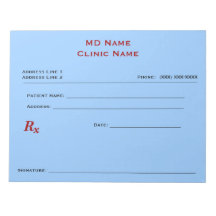
Manual Prescription Pad (Large - Blue)
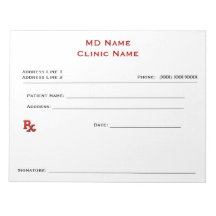
Manual Prescription Pad (Large - White)


VIEW ALL