Friday, September 6, 2024

Peak end rule and its health care implications

Since the pandemic began in March 2020, global health, finances, and even happiness have hurt healthcare. Humans are hard-wired toward negativity and noticing the negative experience before observing the positive is common. While we are good at identifying problems and placing blame on someone or something else, chronic negativity among healthcare workers can lead to a trickle-down impact on our patients. I often hear colleagues complain about decreasing reimbursements, rising overhead costs, the requirement to spend more time entering data than interacting with patients, and the incursion of time-wasting actions such as prior authorization that don't seem to impact patient care but increase the burden on physicians. Instead, I suggest providing patients a positive experience, especially toward the end of the doctor-patient encounter, referred to as the peak-end rule.

What is the peak-end rule? The Peak-End Rule states that an event is remembered more by what happens at the peak or the end than at any other time during the encounter.

The Israeli psychologist and Nobel Prize winner Daniel Kahneman and his colleagues have shown that how we remember our past experiences is almost entirely determined by two things:
  • The average of how the experience felt at its peak (best or worst)
  • How the experience felt when it ended

This is known as the peak-end rule, which is how we summarize experiences. We rely on that summary later to remind ourselves of how an experience felt, affecting our decisions about having that experience again. For example, if your eighteenth birthday was filled with laughter but ended with a fistfight, your memory of that event will likely skew to the worst part of the experience and how you felt when the party was over.


How did it start?


Daniel Kahneman reported in a 1993 study titled "When More Pain is Preferred to Less: Adding a Better End".1 They found that human memory seldom accurately records a series of events, thus proving the influence of the peak-end rule on memory processes.

The research study asked participants to endure an uncomfortable experimental condition where individuals were subjected to two versions of the same unpleasant experience. The experiment's first trial asked participants to submerge their hands in 14°C water for 60 seconds. The second version of the trial asked study participants to submerge their other hand in 14°C water for 60 seconds. Participants were also asked to submerge their hands for an additional 30 seconds while the water temperature was raised to 15°C. After these two trials, participants were asked which option of the trial they would choose to repeat. Study subjects were more willing to repeat the second trial despite the prolonged exposure to uncomfortable temperatures. The study concluded that this happened because subjects chose the long trial simply because they liked the memory better than the alternative.

The peak-end rule has been prevalently studied in medical procedures. It suggests that patients prefer to have more lengthy procedures that include a period of decreased discomfort rather than uncomfortable shorter procedures. The peak-end rule states that a painful medical treatment is likely to be less aversive if relief from the pain is gradual rather than abrupt.

A typical example of the peak-end rule and its effects on medical procedures is the patient's assessment of an uncomfortable colonoscopy procedure. Kahneman conducted another study in 1996 to assess patients' appraisals of this reasonably uncomfortable procedure to test responses based on their use of the peak-end rule.2 The study randomly divided colonoscopy patients into two groups. One group of patients underwent a typical colonoscopy procedure. The second group of patients had the colonoscope left in the colon without any movement for an additional three minutes. This extra three minutes created minimal discomfort but did not cause pain for the patients. When participants were asked to recall and evaluate their experiences from the procedures, the study found that patients with more prolonged colonoscopy procedures, i.e., scope left in longer, rated their experience as less painful than those who underwent the typical colonoscopy procedure. Patients who experienced a more extended procedure were also more likely to return for subsequent procedures. The gradual release of discomfort from these more prolonged procedures led to patients evaluating the experience as a positive experience than the other set of patients.

The study found that patients consistently evaluated the discomfort of the procedures based on the pain intensity at the peak or worst moment and at the final moments of the procedure. Regardless of the length of the procedures or the pain intensity experienced, all colonoscopy patients evaluated their procedures through peak events and ending responses.

Another study by Kahneman and Redelmeier further expanded on the discoveries made in their initial 1996 study.3 The study took colonoscopy patients and randomly divided the patients into two groups. One group of the patients underwent a colonoscopy procedure where the scope was left in for an additional three minutes. Still, the scope was not moved, perhaps causing minimal discomfort but not causing pain for the patients. The other group of study participants underwent typical colonoscopy procedures. When participants were asked to recall and evaluate their experiences from the experiment, the experiment found that patients who had more prolonged colonoscopy procedures rated their experience as less painful than those who underwent the typical colonoscopy procedure. Patients who felt prolonged discomfort were also far less likely to return for subsequent procedures. The gradual release of discomfort from these more prolonged procedures led to patients evaluating the experience as a more positive experience than the other set of patients.

An example of an adverse peak-end event might be returning from a lovely vacation. When you arrive at the baggage claim area after a long flight home, your luggage still needs to arrive. You spend an additional half-hour or more at the airline's baggage claim department filling out forms so that the luggage will be delivered to your home later. This negative experience at the end of your vacation can color your entire vacation by having the end of your holiday ending with this negative experience.

Here are a few examples of the peak-end rule that can be adopted by any doctor or practice:

If you have bad news regarding the patient's medical condition or prognosis, offer the negative news first and end with the good news. For example, if you are delivering a prostate cancer diagnosis, state that first and end with news that the condition is treatable or that you are committed that your patient will be kept comfortable and will not experience significant pain or discomfort.

Another pain point that needs to be put before the end of the communication between the doctor and the practice is the financial transaction that historically occurs at the end of the doctor-patient encounter. I suggest that you reverse the payment process, tell the patient about their deductible, co-pays, and anticipated visit cost, and collect the money before the patient is escorted to the exam room. Also, don't encourage the receptionist to ask, "Would you like to take care of your balance today?" The receptionist will usually receive a response that translates to "no." Instead, the receptionist asks, "Will you pay your balance by check or credit card?" This phrasing is more likely to have a better response rate.

Let the last interaction with the patient be something other than the patient making their follow-up appointment. This should be done at the beginning of the appointment or consider having the medical assistant arrange the appointment while the patient is in the exam room. This makes the peak end more positive and allows the receptionist or scheduler to communicate with callers or new patients.

Another peak-end experience is to send the patient a personalized thank you note to arrive the day after they visit the office. Nothing is more satisfying for a patient than receiving a personalized note from the physician thanking them for being a patient. This can also be accomplished by text or email.

I have yet to prove this, but if a doctor is performing a procedure on an awake patient and is seconds away from completing it, he might consider overestimating the time and then, in two or three seconds, remove the instrument. By overestimating the time, patients report less discomfort, thus improving the peak-end rule.

You and your staff can practice the peak-end rule with a gesture or a compliment. The easiest method for your staff is to use the patient's name at the end of their visit to the office. We all like the sound of our own names, and patients will feel special if we use their names before they exit the practice.

Finally, if you have authored a book for laymen or women, give a copy to the patient as they depart from the office. This is an excellent take-home and elevates the peak-end rule.

Bottom Line: The peak-end rule's applicability is genuinely amazing. Imagine how much more successful you would be if you could ensure that your patients, acquaintances, and loved ones left every interaction with you feeling grateful and happy. Make it a priority to apply the peak-end rule and end all your interactions positively. After all, that's what people remember, recall, and savor.

15% Off Medical Practice Supplies


VIEW ALL


Manual Prescription Pad (Large - Yellow)


Manual Prescription Pad (Large - Pink)

Manual Prescription Pads (Bright Orange)

Manual Prescription Pads (Light Pink)

Manual Prescription Pads (Light Yellow)

Manual Prescription Pad (Large - Blue)

Manual Prescription Pad (Large - White)


VIEW ALL


Wednesday, September 4, 2024

Adding an infusion center to your medical practice

With the ever-evolving healthcare landscape, savvy physicians are increasingly seeking innovative ways to diversify their practice offerings and improve patient care. One such opportunity is the integration of an infusion center into an existing medical practice. Adding this new offering is a strategic move that comes with numerous benefits.When planned and executed correctly, you will improve the quality of care for your patients, experience significant new growth and ensure the financial stability and long-term success of your practice.


Benefits of integrating an infusion center


Infusion centers provide a range of intravenous therapies, including medications for chronic conditions, hydration therapy, and biologic treatments. Below, we explore the benefits of adding an infusion center and how it can become a valuable revenue stream for your practice.


Enhanced patient care


Your new infusion center will allow your patients to receive necessary intravenous treatments in a familiar and comfortable environment and will prevent wasted time travelling to an off-site infusion location.This new, convenient access provides a high level of continuity of care which can lead to better adherence to treatment plans, especially for patients with chronic conditions requiring regular infusions.Offering your patients this service in your practice also sets you up to provide a higher level of personalized care.


Financial advantages


Infusion services allow you to create a steady and substantial source of profitable revenue when offered, authorized, billed and collected appropriately.Revenue includes not only the drug itself, but administration of treatments.Utilizing existing office space allows you to keep costs down and any infusion services partner worth working with won’t charge you start-up or Infusion Suite setup fees, making this a very viable option for most practices.

The growing demand for outpatient infusion therapy creates an incredible opportunity for practices with significant revenue potential that can yield anywhere from $100k to over $1M annually.


Operational benefits


An in-house infusion center fosters better coordination of care, with seamless communication between the infusion team and the physician.By expanding the range of services offered, practices can attract new patients and retain existing ones who require infusion therapy.

Make sure to find a partner that provides solid operational support with things like assistance with obtaining insurance contracts and credentialing, copay assistance, managing regulatory requirements, hiring and staffing oversight, and access to experienced financial and billing services.Having that right partner will allow for a seamless integration, with minimal distraction to your already busy team.

Partnering for success


There are many companies that provide Infusion Suite development and management services.Start by asking for an initial assessment and plan, which will provide you insights into the potential benefits to your unique organization.Partnering with an experienced team who can provide turn-key solutions and wrap-around support will position you for a smooth start and long-term success.

15% Off Medical Practice Supplies


VIEW ALL


Manual Prescription Pad (Large - Yellow)


Manual Prescription Pad (Large - Pink)

Manual Prescription Pads (Bright Orange)

Manual Prescription Pads (Light Pink)

Manual Prescription Pads (Light Yellow)

Manual Prescription Pad (Large - Blue)

Manual Prescription Pad (Large - White)


VIEW ALL


Tuesday, September 3, 2024

The interaction model vs. the holistic model in telehealth

Any discussion of the future of telehealth must delineate between the different telehealth models—notably, the one-time-visit and the holistic model. Note that these names are not technical industry terms but helpful ways of illustrating how a provider offers telehealth services to its members.

Most telehealth services fall within this one-time-visit model. In these cases, telehealth acts as a stopgap and does not replace the primary care physician (PCP) and other clinician providers. Rather, it is a means of solving medical issues on a one-time basis. Much like an urgent care visit, the virtual physician does not take full control or responsibility for medical care; instead, they address what they can within a single, isolated visit. Since the pandemic, patients have become accustomed to the one-time-visit model. Thus, they treat telehealth as a virtual urgent care visit, drawing a hard line between the purpose of their brick-and-mortar PCP and telehealth services.

Unfortunately, there are many problems with the one-time-visit approach, one of which is that care continuity is simply impossible. Patients meet with different and unfamiliar doctors and other clinicians each visit, decreasing their willingness to comply with care and impairing the quality-of-care outcomes.


A holistic approach to telehealth


Unlike the one-time-visit model used by many telehealth companies, which specialize in treating only one individual chronic disease, the holistic approach allows for true primary care that treats the whole patient and addresses all their health concerns, including managing multiple chronic conditions. This approach sees care as a complete, long-term relationship with the patient instead of siloed, one-time visits or exchanges. As a result, patients are more willing to comply with treatment plans, and the provider has greater alignment with the outcomes of the member or patient, forming a deeper patient-physician relationship.

An ideal holistic model will also provide multifactorial virtual care. In other words, the patient isn’t restricted to one means of communication but can use multiple means, whether synchronous video, asynchronous chat, email, phone call, etc. By using many forms of communication to support virtual care, providers offer greater accessibility to patients.


Payviders and holistic telehealth


If the holistic approach to telehealth is superior to the one-time-visit model, why haven’t more companies embraced it? The culture and structure of many businesses – particularly health insurance companies – make it difficult to adopt a holistic style of telehealth.

However, within a payvider model, the holistic approach to telehealth flows naturally. A payvider is a health care entity that delivers care services and handles financial elements as well. It often manifests as an insurance company that provides access to physicians and doctors. Payviders have mechanisms that allow their physicians to take full responsibility for the health care process, e.g., following up on lab tests or X-rays. Physicians operating in a one-time-visit telehealth model might not have those same incentives.

Not only does a payvider have the culture and tools to deliver holistic telehealth, but it also incentivizes greater alignment of interests with patients. In the general health care system today, there is little (if any) alignment of interest between all involved parties. But, because the patient is the payvider’s direct client, there is a real motivation to have the highest quality of care at the lowest cost.


Additional benefits of telehealth through a payvider


When a virtual-first payvider delivers telehealth, it increases accessibility and convenience for the member without creating a siloed, one-time-visit-based style of care. Consider that an urgent-care-type telehealth model focuses exclusively on a singular patient’s issue – say, diabetes, for instance. However, if the patient is experiencing multiple health issues at once, the telehealth physician will recommend they see their family doctor or PCP.

In the real world, people usually have multiple health issues. For example, if someone has diabetes, there is a high chance they also have high blood pressure. If a person has an injury that prevents them from working, they may develop anxiety or depression. During a telehealth visit with a payvider, a patient’s physician will address all or as many health issues as possible rather than one at once.


What technologies enable the holistic model?


Advanced technologies enable a holistic telehealth approach to flourish. Consider that continuity of care, a staple of holistic telehealth, requires routine touchpoints with the same clinicians and doctor. Technology facilitates interactions between patients and doctors, making those key touchpoints more accessible and frequent.

For example, a payvider can send the patient follow-up intakes to fill out regularly, whether for their blood sugar levels or mental health score. This data allows the clinician to track trends in care and see what is happening between visits. Similarly, remote monitoring tools, such as pulse oximeters, heart rate monitors, or glucose meters, enable the physician to manage the patient’s chronic conditions proactively.

Other notable technologies that enable the holistic telehealth model include decision-support systems powered by virtual assistants. These virtual assistants use generative artificial intelligence and machine learning (ML) to automate the pre-screening process, gathering information from the patient, including the reason for their telehealth visit and symptoms.

The virtual assistants will also ask broader health-related questions, such as whether the person has a history of hypertension, diabetes, mental health issues, etc., and then churn that data through ML algorithms to determine if the patient might be at risk, notifying the doctor of the findings.


Preparing for the hybrid health care paradigm


Contrary to the rumblings in the news might imply, telehealth and virtual care are here to stay. Virtual-first payviders, uniquely, are already well-positioned to deliver holistic telehealth. Nevertheless, for other providers to maximize the effectiveness of telehealth and ensure the highest care outcomes for patients, they must move away from a one-time-visit model to a holistic approach. At the same time, physicians and other clinicians must prepare accordingly for this new hybrid health care paradigm, seamlessly integrating the virtual with the physical.

15% Off Medical Practice Supplies


VIEW ALL


Manual Prescription Pad (Large - Yellow)

Manual Prescription Pad (Large - Pink)
Manual Prescription Pads (Bright Orange)
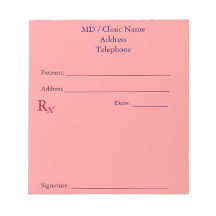
Manual Prescription Pads (Light Pink)

Manual Prescription Pads (Light Yellow)
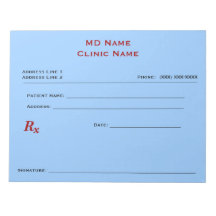
Manual Prescription Pad (Large - Blue)

Manual Prescription Pad (Large - White)


VIEW ALL