Saturday, March 26, 2022

No doctor is an island

The house call is back.Being old enough to have home visits as part of my medical school training, it has been fascinating to watch it come full circle as part of the modern healthcare system.

The surge in adoption of virtual care during the pandemic is receding to a steady state, as both patients and practitioners seek a return to face-to-face visits when appropriate. But for certain populations of patients – most notably the more than 40 million seniors in the U.S. – at-home care is proving to be the best option.

Primarily, because it’s good for the patient. Providing care in the home not only increases the chances that a patient will receive care, but it also gives clinicians a 360-degree view of the medical and social barriers to that care. Housing security, food security, transportation, also known as social determinants of health, profoundly impact quality of life and health outcomes.

This home-care model works best in a team format. The attending physician receives support from office-based staff, perhaps nurse practitioners and administrative assistants. That care team will also gain valuable information in many cases from insights provided by a social worker. And integrating a pharmacist within the model of care produces further positive clinical impact on patients.

But what about the physician? Burnout is already a serious issue, only exacerbated by the pandemic, as is the ongoing struggle with administrative burdens. How can we support them in at-home care, which can add travel time and a different system of administration, to their workload?

This care model isn’t possible in the fee-for-service world. Home-based care only works in the value-based care model, where risk is shared between providers and payers. Instead of billing by the episode, physicians track care and outcomes. In the value-based care “subscription model,” physicians or advance practice providers engage with patients in ways that are best suited for the consumer. For those who are elderly, have multiple medical conditions, or are transportation-challenged, that means at-home care.


Practices still face the challenge of performing their services outside the office, taking them away from some of the usual resources. Using technology-enabled solutions can help make home-based care a stronger reality for more seniors in the years to come. Obviously, it’s now likely that clinicians will use laptops, tablets, or smartphones in the home during a visit. Patients may be using wearable monitoring devices.

But there are two areas where clinicians can benefit most from support in at-home care:

Predictive Analytics: The pandemic, producing an extreme level of stress on clinicians, has exacerbated the already-serious clinician shortage. It is more important than ever that a clinician’s time is spent where it is needed most. Predictive analytics technology can help assess which patients are at the highest risk for adverse outcomes. By segmenting the most at-risk patients, care teams can decide which member of the team is best fit to serve that patients’ needs – freeing up clinicians to work at the top of their license.

Patient Insights at the Point of Care: Electronic health records gather continuous patient information, which can be a good thing, provided that providers have the ability to search through and process these droves of data. Managing this problem is a good use of AI and assistive technologies in healthcare. Providing curated information to providers at the point of care enhances their clinical decision making, reduces the time spent sorting through volumes of data, and lessens the possibility of potential errors.

Identifying the most relevant clinical insights aligns with our theory of “data minimalism.” Data minimalism, in healthcare, means providing the minimum data set a provider needs at the right moment to act, to elevate the care of the patient. When successfully applied, the patient gets better outcomes and the risk bearing entity receives appropriate financial reimbursement.

At-home care should not make a physician feel like they are working on an island, any more than they would in a hospital or their office. Re-thinking the tools they use and need in that setting can make home-based care work as well for physicians as it does for the patients they serve.


15% Off Medical Practice Supplies


VIEW ALL


Manual Prescription Pad (Large - Yellow)


Manual Prescription Pad (Large - Pink)

Manual Prescription Pads (Bright Orange)

Manual Prescription Pads (Light Pink)

Manual Prescription Pads (Light Yellow)

Manual Prescription Pad (Large - Blue)

Manual Prescription Pad (Large - White)


VIEW ALL

Friday, March 25, 2022

CIAs, Exclusions, and your medical practice

Before delving into a recent U.S. Department of Justice (DOJ) settlement, which involved employing an “excluded” individual, it’s important to appreciate some of the tools that the U.S. Department of Health and Human Services Office of the Inspector General (HHS-OIG) has at its disposal – corporate integrity agreements (CIA) and exclusion from all federal programs.

CIAs – are negotiated by HHS-OIG “with healthcare providers and other entities as part of the settlement of Federal health care program investigations arising under a variety of civil false claims statutes. Providers or entities agree to the obligations, and in exchange, OIG agrees not to seek their exclusion from participation in Medicare, Medicaid, or other Federal health care programs.” Typically, a CIA lasts 5 years and the person who enters into the CIA must make scheduled reports to HHS-OIG. Importantly, CIAs are specific to the facts and circumstances of a particular matter and include breach and default provisions, which enable HHS-OIG to impose additional monetary penalties (i.e., Stipulated Penalties). A material breach of the CIA “constitutes an independent basis for the provider’s exclusion from participating in Federal healthcare programs.”

Exclusions – have been around since 1977 and are imposed by HHS-OIG; however, they may arise because of a False Claims Act case or other matter that was initiated through or by DOJ. HHS-OIG’s authority to impose exclusions is derived from the Social Security Act §§ 1128, 1156.“The scope of an exclusion under section 1128 of the Act is from all Federal health care programs, as defined in 42 CFR 1001.2. … Exclusions under section 1156 of the Act do not reach other Federal programs (although HHS or another Federal agency could separately initiate a suspension or debarment of an excluded person from other Federal procurement or nonprocurement programs).” The process begins when a person receives a Notices of Intent to Exclude (NOI). From there, the recipient of the NOI is given the opportunity to respond. Once all the information is considered, HHS-OIG renders its decision. If the findings substantiate exclusion, the person is notified. From there, they may appeal to an HHS Administrative Law Judge and further appeal to the HHS Departmental Appeals Board (DAB). After the DAB renders its decision, judicial review in a U.S. District Court is also available. Reinstatement of an individual or entity is not automatic; rather, the person must apply for reinstatement. If reinstated, the person receives written notice from HHS-OIG that they have been reinstated. The excluded individual may begin the process 90 days before their period of exclusion ends.


On March 18, 2022, the DOJ announced that Windham Eye Care Practice and its Owners Pay $192K for Employing “Excluded” Individual. Specifically, the federal and state governments entered into a civil settlement agreement “to resolve allegations that they improperly employed an individual who was excluded from all federal healthcare programs.” Windham Eye Group (WEG) employed Michael Vallone as its practice administrator from February 2010 through May 2021. Previously, Mr. Vallone was convicted of healthcare fraud in the District of New Jersey and was excluded from all federal healthcare programs under §1128 of the Social Security Act.

As noted by the DOJ, when HHS-OIG “excludes an individual or entity from federal health care programs, no program payments may be made for items or services furnished by that excluded individual or entity.” (emphasis added). The relevance to the WEG was that a portion of the reimbursements received from the federal healthcare programs were used to pay Mr. Vallone’s salary and benefits.

I have often reiterated the phrase, “an ounce of prevention is worth a pound of cure.” HHS-OIG issued an Updated Special Advisory Bulletin in May 2013, emphasizing that in order to avoid potential liability, health care providers and organizations providing services directly or indirectly should check the List of Excluded Individuals/Entities on the HHS-OIG website. It is imperative that entities receiving remuneration from Federal health care programs – whether directly or indirectly, have both background checks and exclusion checks as part of their policies and procedures.


15% Off Medical Practice Supplies


VIEW ALL


Manual Prescription Pad (Large - Yellow)


Manual Prescription Pad (Large - Pink)

Manual Prescription Pads (Bright Orange)

Manual Prescription Pads (Light Pink)

Manual Prescription Pads (Light Yellow)

Manual Prescription Pad (Large - Blue)

Manual Prescription Pad (Large - White)


VIEW ALL

Thursday, March 24, 2022

Delighting payers and patients with turn-key behavioral health solutions

The Greek philosopher Heraclitus once noted that “Change is the only true constant.”It is safe to say that the expectations of payers are changing, and those expectations will most certainly impact the revenue of and for your medical practice.

Here’s one example. We’ve all read about, and seen firsthand, the upwards trend in mental health issues during the pandemic.There has been a dramatic increase in substance abuse, ongoing challenges of pain management and prescription drug abuse, especially for people who may have been afraid to venture out for treatment or who were unable to get the requisite surgeries they were anticipating.

Employers, the ultimate payers, have clearly indicated that getting adequate behavioral health resources for their workforce is a priority. However, amidst a serious shortage of behavioral health therapists available to treat these patients, how will this gap be bridged? Perhaps the pandemic that created the problem can also deliver the solution?

At this point, the eyes of payers and patients have both turned to the doctor as the solution.Physicians although overburdened with paperwork and the stress of seeing even more patients in a digital world, are being asked to now screen for behavioral health issues during their already rushed office visits.It is assumed that they can observe potentially problematic behaviors or the subtle signs of psycho-social determinants of healthcare outcomes.

Given the length of time for the average office visit and the lack of resources that physicians have to support them in this process, it’s not likely or possible that the medical practice can take on this task.Even though physicians will agree that patients would benefit and their outcomes will most certainly improve, adding another item to an otherwise full plate will be difficult.

Payers, however, believe that addressing the underlying psycho-social determinants of health is a real differentiator that can drive tremendous outcomes. It addresses a multitude of issues that drive claim volatility and create unnecessary expenses and poor clinical outcomes. Any practice that offers a solution to address the entire bio-psycho-social aspect of the patient will certainly be viewed in a more attractive light.


So, if both physicians and payers agree that addressing the entire person through a bio-psycho-social lens is a good idea, but practices are overburdened already…what is the solution?Here is where the pandemic created an opportunity for a solution to appear.In the middle of a global pandemic, when the world was shut down, it became mainstream for the doctor-patient relationship to shift its location from the bedside to the digital arena.

As more and more medical services were offered remotely during the pandemic, mental health was included in those service offerings. Patients and therapists who once thought therapy could only be effective if delivered in person, changed their opinions when they experienced remote counseling sessions. Remote therapy solves the problems of access and provides an opportunity to screen patients as well.

As the scientific understanding of how the brain works is further elucidated, we have seen the advent of new options for digital engagement such as virtual reality.Virtual reality is exceptional at giving patients an immersive experience into another realm of reality that helps to develop neural pathways that reduce pain, depression and anxiety and promote increased levels of patient resiliency. Studies show that patients experience permanent, long-term relief from these and other symptoms without drugs or surgery. This technology offers a new way to achieve faster, permanent relief in a patient-centric digital fashion.

The most efficacious virtual reality treatments utilize behavioral health coaching by qualified remote therapists teaching mindfulness and stress management.As important as the outcomes, there are no extended waiting periods for months for an opening in a therapists’ schedule.The almost instant access to a behavioral therapist and a virtual reality platform provides an answer to the providers and the payers issues in near real-time fashion.

Screening protocols easily identify the patients who are the right candidates for this virtual therapy, including those with underlying social or psychological underpinnings.The ability to outsource these screening protocols to the behavioral health providers lowers the barrier of entry to make this process easy for the patient and the provider. After an easy handoff, the program begins for the patient and then weekly reports will go to the physician on the patient’s progress.

So, if change is constant, it is the role of the astute physician to constantly change and embrace new methods by which to engage their patients, expand their services and develop new synergies in clinical care to provide holistic patient care and stand out in a crowded field with new and effective solutions to serious, prevalent problems.


15% Off Medical Practice Supplies


VIEW ALL


Manual Prescription Pad (Large - Yellow)

Manual Prescription Pad (Large - Pink)

Manual Prescription Pads (Bright Orange)
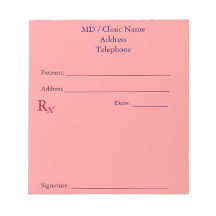
Manual Prescription Pads (Light Pink)

Manual Prescription Pads (Light Yellow)

Manual Prescription Pad (Large - Blue)
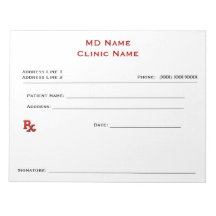
Manual Prescription Pad (Large - White)


VIEW ALL