Showing posts with label dental. Show all posts

Wednesday, November 18, 2020

Can, and Should, You Keep Your Practice Open Through the Pandemic?

Never before have we faced such an extensive global health risk and economic disruption. Amid stay at home orders, social distancing guidelines, and overwhelming fear, countless businesses are closing, including many medical practices. Some do not know when or if they will reopen.


Keeping the doors open: is it possible and feasible?


There is no question that the crisis will affect your practice. The question is how severe the impact will be, and how you can stay afloat in these uncertain times.To some extent, the decision may be out of your hands. At the time of this writing, cosmetic, elective, and non-urgent medical treatments are currently prohibited in many areas across North America. However, some remain open and restrictions are expected to ease in coming weeks.


The situation is fluid, so it is essential that you stay up to date on the latest requirements and recommendations. Beyond legalities, there are several things to consider before deciding to (or not to) close your practice:


  • Assess the health risk: Can you reasonably protect clinicians, other staff members, and patients? This depends on your location, patient demographic, type of services you offer, and even the layout of your office. It will also change over time, as the rate of spread increases and decreases in your locality, so you should constantly re-assess.
  • Determine the need for services: It might not be financially feasible to keep your office open and staffed for emergencies if they are rare in your specialty. On the other hand, if you are likely to see a lot of emergency patients, it may be profitable to remain open, and it may alleviate some of the burden on local ER facilities.
  • Review your insurance: Of course, your policy will not explicitly say whether you are covered for Covid 19 related liability, because the disease did not exist when you purchased insurance. It will be included under some policies, but not all. If you are not sure, contact your insurance company or talk to your lawyer. You need to understand your liability before deciding.

Plan for success


Maybe you have decided to stay open, but it certainly is not business as usual. The situation can change on a daily — sometimes hourly – basis. Do not let your office devolve into chaos!


Instead, expect the unexpected. Be prepared and keep your team prepared:


  • Take stock of supplies: The worldwide shortage of personal protective equipment (PPE) and other medical supplies is unprecedented. What is available today might not be tomorrow. Take inventory of what you have in your office and estimate how long it will last. If you expect to run out quickly, it may be prudent to limit services to the most serious emergencies. Some practices have been forced to close due to lack of supplies.
  • Create tentative plans: No one knows what to expect, but we can make a good guess, at least for the immediate future. Rather than postponing decisions until you have solid answers, make a detailed plan based on current information. It can be adjusted as things change, but at least you will have a starting point. Also try to anticipate possible “what if” scenarios. What if a clinician or staff member contacts Covid 19? What if a patient displayed possible symptoms? What if you run low on PPE supplies?
  • Establish a clear chain of command: Despite your best efforts, unexpected issues can and probably will arise. Who has the final word in important decisions? What if that person is not available and the situation is urgent? Do several people need to discuss important matters? If so, how will you call a virtual meeting? You want to answer these and similar questions before they arise.
  • Keep staff informed: Do not just plan ahead in your mind. Document the appropriate process for handling various situations and discuss your plans with your team. Make sure everyone knows the chain of command, and that they have applicable contact information. The last thing you want is an employee faced with an unexpected problem and no idea what to do or who to call.

Keep your revenue stream flowing


Unless you specialize in infectious diseases or operate an urgent care facility, you can expect a reduction in patients. That means a reduction in income, at a time when you and your employees can least afford it. However, there are steps you can take to minimize the impact:


  • Explore telehealth options: Online appointments are a great way to conduct post-treatment follow ups, initial consultations, discuss future elective treatments, and in some cases even preliminary visual diagnostics. This can expand your range of services, increase your income stream during the crisis, and reduce the number of people physically present in your office. Even if you must close your doors for a time, you can remain open for virtual business.
  • Consider alternate services: If your practice focuses on aesthetic or other “nonessential” services, you might have to close for a time. However, you may be able to temporarily transform into an essential facility. For example instead of smile makeovers, offer emergency dentistry. Instead of Botox, offer treatment for wounds, burns, and other dermatological emergencies.
  • Be financially proactive: Do not wait until you are confronted with a bill you cannot pay. Crunch the numbers. See what your projected revenue looks like and compare that to your financial obligations. Start contacting vendors to inquire about potential discounts or options for delayed payment. Look into loans. Explore ways to reduce expenses if needed. Make a contingency plan and be prepared.
  • Adjust your marketing strategy: First and foremost, if you are limited to emergency patients make sure you have paused any advertisements for elective procedures. Running these ads is not only a waste of money but it will give people the impression that you are not following local mandates. Secondly, optimize your marketing for emergency services, post on social media to let people know you are available, and use other applicable channels to get the word out.

Conclusion


The loss of human life is unquestionably the greatest tragedy of this pandemic. However, it is far from the only effect. An unknown number of businesses will not recover, and countless jobs will be lost. With some careful planning and smart decisions, you can make sure that your practice does not succumb to the economic fallout.


Medical Practice Supplies


VIEW ALL
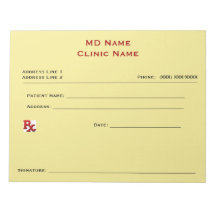


Manual Prescription Pad (Large - Yellow)
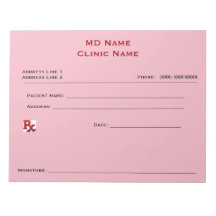

Manual Prescription Pad (Large - Pink)

Manual Prescription Pads (Bright Orange)
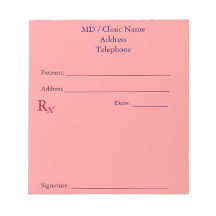
Manual Prescription Pads (Light Pink)

Manual Prescription Pads (Light Yellow)
Manual Prescription Pad (Large - Blue)
Manual Prescription Pad (Large - White)


VIEW ALL

Saturday, September 12, 2020

Tax savings plans targeting physicians require caution

Tax savings plans targeting doctors require careful due diligence. We examine some of the basics every physician should be aware of.

Our return to work after Labor Day marks the start of the 3rd quarter, when tax plans targeting doctors traditionally turn up their sales pressure. While I’m certainly in favor of you using all legal methods available to minimize income taxes, the abuse of legitimate tax plans by various plan promoters and their clients is common. It’s also unfortunately common that some plans that sound reasonable and that are presented by seemingly credible salespeople, lack any legal basis whatsoever.

We are also in the middle of both an election season that may bring significant changes to current tax laws and multiple economic crises that increase the need to retain as much of your income as possible. Promoters of all skill levels are acutely aware of all these issues and some may use that knowledge and the contentious nature of current politics to play upon your fears or their claimed affinity with your particular political beliefs. In the best cases they are merely playing on your emotions, in the worst cases they are engaging in actual affinity fraud that may center around tax planning or investments including currency trading and cryptocurrency.


Remember That You Are Always Responsible


No matter who you rely on for tax advice, it is vital that you always remember that you, the taxpayer, are the legally responsible party for the information contained in your tax return and the legality of any deductions or tax strategy you use. While some licensed advisors may have professional liability for any advice they give you, the taxes, interest, penalties, and potential civil and criminal legal liability are your problem, and your expense. Not only will you have to recover from an advisor for their errors and omissions separately, in some cases they become an additional legal liability, as I’ve previous detailed in several discussions on captive insurance company audits.


Check With the IRS First and Know The Dirty Dozen


Due diligence is vital, and the first place I look to is always the IRS itself. The IRS.gov website has plain-English explanations of a variety of tax plans and the compliance details each requires. It also provides a way to report abusive transactions and identifies the worst plans that receive the greatest scrutiny both on the annual “Dirty Dozen List” of tax scams and on the larger and more detailed “listed transactions” list that should be an immediate red flag and indication that you need a second opinion if you see a transaction you are involved in described.


Two Specific Strategies IRS is Looking At Closely This Year


I previously covered some of the details that can make a technically legitimate strategy like conservation easements into an abusive one and how well-meaning physicians can bring each other into harm’s way when sharing an “opportunity”. My friend and colleague, Jay Adkisson , added additional color to this strategy in a his recent article for Forbes that details the negative attention they recently received from the U.S. Senate; it predicts rough seas ahead.

Similarly, captive insurance companies, and the 831(b) micro-captives that physicians in particular often end up in, continue to face scrutiny and the I.R.S. has actually sent two warning letters to micro-captive owners advising them to get a second opinion and come clean about any compliance issues and voluntarily pay what they owe. Essentially, “Don’t make us come get you”.

Finally, consider these questions about any tax promoter:
  • Are they a licensed professional like a CPA, CFP, attorney etc. that may have attorney client privilege on your communications and both a fiduciary duty to provide accurate advice and professional liability for failing to do so?
  • Is the promoter raising red flags for possible tax fraud like one or more of the following?
  • They require an NDA agreement and that you keep their “proprietary” advice confidential, including from your other advisors?
  • They use questionable sales techniques emphasize emotional issues like politics and name dropping of the “rich and famous people” that use these “secret strategies” rather than identifying specific tax code, law and etc.
They are unwilling or unable to provide written materials about their strategy or to answer questions
Do they have specific training and experience beyond just sales and do they have a proven history with the strategy?

Medical Practice Supplies


VIEW ALL


Manual Prescription Pad (Large - Yellow)


Manual Prescription Pad (Large - Pink)

Manual Prescription Pads (Bright Orange)

Manual Prescription Pads (Light Pink)

Manual Prescription Pads (Light Yellow)

Manual Prescription Pad (Large - Blue)

Manual Prescription Pad (Large - White)


VIEW ALL

.

Friday, September 11, 2020

Futureproofing your healthcare organization against tech disruptors

With the coronavirus pandemic, technology adoption has been accelerating far more quickly than is typical. Practices are being pushed to begin using telemedicine tools, patient portals, and other digital patient interaction platforms and solutions. Not only is there a growing obvious need for these types of technologies, but patients are now expecting to be able to interact with their providers electronically and access their records from the practice and from all related health systems, labs, and specialists.

Additionally, under the current circumstances, the gaps in public health reporting are increasingly evident, which puts extra emphasis on the need for improvements in information sharing. The need for efficient data integration and sharing is growing, and there are significant disparities in healthcare organizations’ ability to quickly collect and view patient data from within the organization and from external sources.

To support these existing needs and expectations, and to be able to adapt and scale in response to future demands, having fundamental interoperability capabilities in place is essential. For practices that have been slow to adopt these types of technologies, the stakes are much greater as the urgency to get up to speed is intensifying.


Healthcare organizations that are slow to adopt integration technology are not dragging their feet or burying their heads in the sand. Conversely, it’s typically a matter of can’t rather than won’t. Financial and operational barriers are usually the challenges organizations are up against when it comes to addressing and managing issues associated with data integration.

That said, the need to connect and exchange data bidirectionally with other constituencies is ever growing, and at this point, critical. With the entirety of healthcare across the globe feeling the effects of COVID-19, it’s never been more important to be mindful of the expanding requirements of interoperability. The need for contact-less care is redefining the way healthcare organizations use technology. In order to accommodate the rising need for data and information sharing, having flexible tools in place to adjust and scale appropriately is essential.

An overlooked potential side effect of the COVID-19 pandemic is the likelihood that this will accelerate efforts by “digital disruptors” like Google and Amazon to leverage their longstanding experience in customer relationship management and ability to rapidly scale, interpret, and analyze data, to swoop in and take over consumer relationships in healthcare. When practices adopt technology that allows patients to connect with their PCP digitally and access their health information online, it helps to foster and strengthen the unique bond between the patient and the clinician that digital disruptors cannot duplicate. Deepening patient/provider relationships and practice loyalty may be the only effective and sustainable way for practices to fend off the looming threat of tech giants that have the power to disintermediate physicians and commoditize care in ways that could be damaging to the longevity of the practice.

Practices should also be encouraging patients to use the practice’s provider portal and find ways to maximize the patient’s digital experience by creating robust offerings via their website and apps. Forward-thinking practices are starting to take measures to strengthen their “digital front door,” and are also considering a variety of ways in which patients are and want to be interacting with healthcare data systems.


Whether it’s being ready for the next wave of new/necessary technology, managing patient care digitally, or sending/receiving data across disparate locations, practice leaders should be thinking about what they can be doing now to support these existing demands and how they can best prepare for the inevitable next challenge in healthcare.

The good news for practices is that the tools required to support the growing reliance on, and evolution of, healthcare technology already exist and are readily available for those who want it. While we don’t yet know what the next industry hurdle will be, experience shows us that we can never be too prepared


Medical Practice Supplies


VIEW ALL


Manual Prescription Pad (Large - Yellow)


Manual Prescription Pad (Large - Pink)

Manual Prescription Pads (Bright Orange)

Manual Prescription Pads (Light Pink)

Manual Prescription Pads (Light Yellow)

Manual Prescription Pad (Large - Blue)

Manual Prescription Pad (Large - White)


VIEW ALL

.