Showing posts with label education. Show all posts

Wednesday, September 22, 2021

School-Based Vision Program Linked to Improved Student Academic Performance

Due to substantial issues of uncorrected visual impairment from refractive error in school-age children, school-based vision programs (SBVPs) may offer opportunities to improve access to care, particularly in high-poverty neighborhoods.

As a result, a recent study aimed to assess the impact of a citywide SBVP Vision for Baltimore’s school-based vision services, including provision of eyeglasses, student achievement in English language arts and mathematics.

Investigators, led by Megan E. Collins, MD, MPH, Wilmer Eye Institute, Johns Hopkins University School of Medicine, observed students who received eyeglasses through an SBVP achieved better reading scores, with improved academic achievement over 1 year but no sustained impact after 2 years.


Methods


The team performed a cluster randomized clinical trial conducted in Baltimore City Public Schools during school years from 2016 - 2019. It included 127 schools in the study, after exclusion of 24 schools for lack of eligibility.

Each school was stratified and randomized with a 1:1:1 ratio into 3 study cohorts using block randomization. They noted cohorts 1, 2, and 3 received Vision for Baltimore interventions during 1 of 3 school years, including 2016 - 2017, 2017 - 2018, and 2018 - 2019.

The Vision for Baltimore services included vision screening, eye examinations, and eyeglasses, with screenings conducted for all students. Those who failed the screening test were provided a 2-sided consent form offering an eye examination and research participation.

For outcome measurements, investigators used reading and mathematics scores from the i-Ready test and the Partnership for Assessment of Readiness for College and Careers (PARCC) test. Demographic data was obtained from Baltimore City Public Schools.

Investigators noted program effect size (ES) was defined as the difference in score on a particular academic test between intervention and control groups.

The primary study outcome included the 1-year intervention impact, measured by ES, to compare cohort 1 (intervention group) with cohorts 2 and 3 (control) at the end of the 2017 - 2018 program year. In addition, they compared cohort 2 (intervention) with cohort 3 (control).

Further, secondary outcomes included the 2-year intervention impact, measured by comparing cohort 1 (intervention) with cohort 3 (control) at the end of the 2017 - 2018 program year.


Results


After randomization, a total of 42 schools were collected in cohort 1 and cohort 2 and 43 schools were included in cohort 3.

Data show the analytic sample included 2304 students, with 54.7% female (n = 1260) and a mean age of 9.4 years. Patients were mostly Black (n = 1789, 77.6%), followed by White (n = 432, 18.8%) and Latinx (n = 388, 16.8%). Also, 406 students (17.6%) in special education were included.

Further, the team observed an overall 1-year positive impact on the i-Ready reading score (ES, 0.09; P = .02) during the 2016 - 2017 school year.

Similarly, a positive impact on i-Ready reading scores was seen during the 2017 - 2018 school year (ES, 0.12; P = .09) and PARCC test scores during the 2016 - 2017 (ES, 0.04, P = .31) and the 2017 - 2018 school year (ES, 0.04, P = .59).

At 2 years, data show a positive intervention impact on i-Ready reading scores (ES 0.08, P = .23) and mathematics scores (ES, 0.08, P = .20), but were not considered statistically significant.

Furthermore, the team observed a positive impact among female students (ES 0.15, P <.001) and those in special education (ES 0.25, P <.001) on i-Ready reading.

In addition, a positive impact was seen among students in elementary grades on i-Ready mathematics (ES 0.03, P <.001) during the 2016 - 2017 school year. However, the intervention did not show a sustained impact at 2 years or on PARCC testing.


Conclusion


The study concluded the benefit of SBVP at 1 year was not sustained after 2 years, noting students may wear eyeglasses less over time or refractive correction may not be sufficient enough.

“Collectively, these findings underscore that for SBVPs to maximize impact, they must not only provide eyeglasses but also ensure mechanisms for monitoring wear, replacement, and connection to community eye care clinicians for long-term care,” investigators wrote.

The study, “Effect of a Randomized Interventional School-Based Vision Program on Academic Performance of Students in Grades 3 to 7,” was published online in JAMA Ophthalmology.


15% Off Medical Practice Supplies


VIEW ALL


Manual Prescription Pad (Large - Yellow)


Manual Prescription Pad (Large - Pink)

Manual Prescription Pads (Bright Orange)

Manual Prescription Pads (Light Pink)

Manual Prescription Pads (Light Yellow)

Manual Prescription Pad (Large - Blue)

Manual Prescription Pad (Large - White)


VIEW ALL

Wednesday, June 9, 2021

Medical School Debt: Best practices when paying it off

Taking on medical school debt can be a smart investment to increase your future earning potential. However, you still need to pay off that debt in a smart way to make sure that it doesn't cost you any more than it needs to.

1. Don't Throw All Your Cash at Your Debt


This may seem counter-intuitive, but don't throw every last cent from your paycheck towards paying your loans off early. It's always important to keep some cash on hand in an emergency fund, to cover unexpected events like car repairs or health expenses. You don't want to turn relatively inexpensive student loan debt into credit card debt because you had no cash savings to cover an emergency.

Next, think about other goals you have, such as buying a home or getting married. Again, not keeping extra cash to cover these expenses could lead to you feeling pressured to take out new debt at a higher rate.


2. Consider Income-Driven Repayment


Income-driven repayment programs, such as ‘Pay as You Earn’, cap your monthly student loan payments at around 10 percent of your income. While you might want to knock your student loans out as quickly as possible, trying to do so during residency or even the first few years of your career could put you in a needless cash crunch.

If you're worried about interest, remember that federal income-driven plans cap the amount of interest that can accrue while you're in the plan. Finally, you can always make extra payments above the minimum when you can comfortably afford to do so.


3. Use Caution When Refinancing


You'll likely be bombarded with offers from private lenders offering to refinance your federal student loans at a lower rate. If these loans were equal, it would be a smart move, but that is not always the case.

Federal student loans have several benefits including income-driven repayment options, public service loan forgiveness opportunities, and a more forgiving way of dealing with financial hardships (such as long-term disability). Therefore, if you refinance to a private loan, you're taking on added risk for the lower rate.


4. Avoid Lifestyle Creep


When you start getting a bigger paycheck, avoid the temptation to dramatically increase your spending. Some people say to keep living like a resident, but you don't even need to take it that far.

Prioritize building an emergency fund, mid-term savings goals, maxing out your retirement accounts, and paying down your student loans. Once those goals are met, you can treat yourself a little for your hard work.


5. Budget Your Salary, Invest Your Bonuses


It's a good idea to create a budget based on your fixed salary. Treat any signing bonuses, annual bonuses, or overtime compensation as an unexpected windfall. Use them towards an extra student loan payment or as a way of meeting your savings goals faster.


6. Pay Off Higher Interest Student Loans First


There is no benefit to paying off smaller student loans first, and most of the time you'll only have one monthly payment even with multiple loans. Pay off the highest interest rate loans first to pay less in interest over time.

When you're doing this, watch how your payments are applied. If you set a monthly automatic payment higher than the minimum, it may be divided between all of your loans. The same thing applies if you make an extra payment without specifying the loan it should go towards. If you pay online, there should be an option to select the specific loan you want to make a payment on.


15% Off Medical Practice Supplies


VIEW ALL


Manual Prescription Pad (Large - Yellow)

Manual Prescription Pad (Large - Pink)
Manual Prescription Pads (Bright Orange)
Manual Prescription Pads (Light Pink)

Manual Prescription Pads (Light Yellow)
Manual Prescription Pad (Large - Blue)
Manual Prescription Pad (Large - White)


VIEW ALL

Friday, February 5, 2021

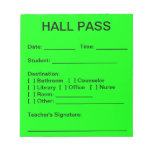
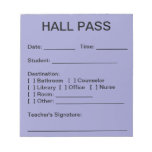
20% Off School Hall Pass Notepads

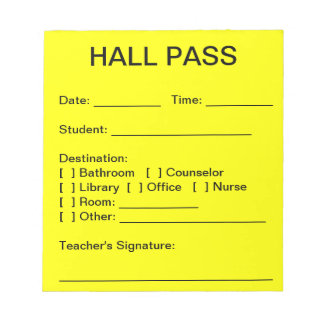
 A great way to keep an eye on student movements outside the classroom and improve school safety. Our hall passes have room for the date, student name, destination, departure time, and the teacher's signature.

VIEW ALLHall Pass Pad Memo Notepads

Tuesday, November 3, 2020

Providing a Learning Environment for Medical Students During the COVID-19 Crisis

Most physicians who work in an academic or private practice setting teach medical students. If students who have been assigned to you for their clinical rotations have had limitations placed on their level of patient contact due to the coronavirus 2019 (COVID-19) pandemic, you are likely very concerned about their medical education. There are some approaches you can use to maximize your medically students’ learning—even during this unusual time.


Assign Critical Data Evaluation


Most of us have never experienced anything like the COVID-19 crisis ever before. The infection can alter the way patients in many specialties are cared for. Your students can work on finding the most accurate and reliable information available when it comes to the implications for patients that are cared for in your specialty.

Students can learn how to research updated information about local and worldwide statistics, the risks for your patient population, and preventative strategies. Even if your students aren’t allowed to have personal contact with your patients, they can become proficient in issues that weren’t ever considered prior to this crisis, like assessing information about patient immunity. And students will be able to use skills built through this process for the remainder of their medical careers.

It is impossible to predict which new challenges may emerge in the future and how these challenges will affect different patient populations. Guiding your students to critically evaluate data that is emerging in real time is valuable for their eventual independence as future physicians.


Promote Technology Proficiency


Students will soon walk into residency training with the expectation to use electronic medical records (EMR) for documentation, billing, and communication between different providers. And the doctors of tomorrow also have a high likelihood of incorporating telemedicine and remote patient monitoring into their practices.

While telemedicine certainly has its limitations, it can be a safe vehicle for students to observe patient care and decision making. Students can get valuable experience by understanding the utility of different methods used for patient care besides the traditional clinic visit and in-hospital modes of delivery. Medical students can learn to appreciate the ways that patients can benefit from discussing concerns like subtle changes in their symptoms or possible medication side effects.

And home monitoring devices that provide you with updates on your patients’ readings of blood glucose and heart rhythm may be taken into consideration when making medication adjustments without an in-person patient visit. The doctors of tomorrow will no doubt be using remote tools, and it is never too early for students to learn the utility and limits of virtual patient care.


Emphasize the Physical Examination


Telemedicine and social distancing always mean skipping parts of the patient physical examination. But there is a difference between eliminating steps out of necessity and rushing or cutting corners. When your student can’t be part of the physical examination process, they should still learn what the missing parts of the physical examination are and why these aspects of the physical exam are important.

Students need to hear which components of the physical examination would have been done if it were possible and what the different findings could be. They need to understand how information gained from the physical exam can change the patient care plan.

And while some medical schools may incorporate artificial mannequins for students to practice on, students need to be reminded that they will eventually have to guide real live patients through diagnostic tests that require touching or that might cause a small degree of pain. This is especially important given that when patients eventually return to more in-person care after the crisis is over, they might be skittish about the risks of physical contact for years to come.


Evaluate Diagnostic Tests Carefully


Diagnostic tests can carry more weight than usual when the risk of infection prevents patients from having these evaluations as often as would have otherwise been recommended. This means that medical decisions might be made with less information than in the past.

Students might not have the advantage of comparing changes in test results over time. So, each portion of a diagnostic test must be scrutinized carefully with an understanding that the results might have changed if the test could be easily repeated. And students may have more time to read official radiology reports and compare the reports to the original images, deepening their ability to interpret diagnostic tests.

Teaching is a challenge that most physicians welcome. But creating a valuable learning environment for medical students is especially challenging because the world differs so dramatically from when you were a “hands-on” student. It’s important to explore ways to maximize the experiences of medical students so they can face the challenges of the potentially different world that they will one day practice medicine in.

Medical Practice Supplies


VIEW ALL


Manual Prescription Pad (Large - Yellow)


Manual Prescription Pad (Large - Pink)

Manual Prescription Pads (Bright Orange)

Manual Prescription Pads (Light Pink)

Manual Prescription Pads (Light Yellow)

Manual Prescription Pad (Large - Blue)

Manual Prescription Pad (Large - White)


VIEW ALL