Showing posts with label healthcare and hospitals. Show all posts

Thursday, November 12, 2020

COVID-19 Diagnosis at Stroke Onset Linked to Worse Outcomes

A recently published analysis of coronavirus disease 2019 (COVID-19) data from more than 1400 patients with stroke offers a new view of outcome predictors for this closely watched patient population.1

All told, the data suggest that having COVID-19 at onset of stroke is associated with more than twice the rate of mortality of other patients with stroke and worse outcomes, as well as that individuals of Asian descent may be at higher risk of COVID-19-associated strokes than other groups.

"Our findings suggest that in some people, COVID-19 may influence stroke risk through its effect on excessive blood clotting or inflammation, and may also influence the characteristics and outcome of the stroke, including greater severity with a higher chance of multiple large vessel blood clots,” said study investigator David Werring, PhD, professor and consultant neurologist, Queen Square Institute of Neurology, University College London (UCL), and National Hospital for Neurology and Neurosurgery, in a statement.2

Werring added that the data offer support for testing individuals for COVID-19 when they present to the hospital with a stroke, and noted that “further research is needed to determine whether treatments (such as the use of early full dose anticoagulation) should differ depending on this test result.”

With a knowledge gap related to characteristics and outcomes of stroke in patients with COVID-19, Werring and team of colleagues from the University College of London sought to provide clinicians with an updated overview of trends in this area. The (Service Evaluation of The Impact of COVID-19 On Stroke (SETICOS) project, which is currently being conducted in 13 stroke centers in England and Scotland, was designed to fill this hole.


Using data from SETICOS, investigators created a case-control study with patients admitted for stroke between March 9 and July 5, 2020. From a search of this time period, investigators identified 86 patients with stroke and evidence of COVID-19 at time of onset. For their analysis, investigators compared the characteristics and outcomes of these patients to those of the 1384 stroke patients admitted during the same time period without evidence of COVID-19.

Of the 86 patients with strokes and COVID-19, 81 were ischemic strokes and 5 were intracerebral hemorrhages. This group had a median age of 74.5 years (range, 67–84), and 54.7% were men, 71.6% were white, 9.5% were black, and 17.6% were Asian. Of the 1834 stroke patients in the control group, 1193 ischemic strokes and 191 were intracerebral hemorrhages. This group had a median age of 73 years (range, 61–82), 52.8% were men, 82.3% were white, 9.1% were black, and 7.3% were Asian.

In comparison to controls with ischemic stroke, those with ischemic stroke and COVID-19 were more likely to have multiple large vessel occlusions (17.9% vs 8.1%; P <.03) and were more severe (median National Institutes of Health Stroke Scale [NIHSS] score, 8 vs 5; P <.002).

Additionally, those with COVID-19 and ischemic stroke were associated with higher log10 D-dimer levels (COVID-19: 3.4; controls: 3.0; P <.01), as well as higher variance (standard deviation 0.83 vs. 0.63; P <.03), indicating there was a broader distribution of D-dimers in those with COVID-19. As well, those with COVID-19 were associated with more severe disability on discharge (median modified Rankin Scale (mRS) score, 4 vs 3; P <.0001) and inpatient death (19.8% vs 9.6%; P <.0001).

Additionally, in the 44 instances in which ischemic stroke and COVID-19 were present with both symptom onset dates recorded, COVID-19-relevant symptoms—fever, cough, or dyspnea—occurred a median of 6 days before the stroke onset. For the 3 individuals with intracerebral hemorrhage who had both dates recorded, the COVID-19 symptoms occurred a median of 4 days after the stroke onset. “Although the numbers are small, the difference between these two medians was significant (P <.002),” Werring et al. wrote.

With regard to outcomes, 19.8% of ischemic strokes among patients with COVID-19 resulted in death compared to 9.6% of patients in the control group (P <.00003). Additionally, the investigators pointed out that the recurrence of stroke during admission was very rare among those with COVID-19 (2.3%) and the control group (1.0%).

“By comparing characteristics and outcomes of strokes experienced by people with and without COVID-19, we found that there were differences between the groups, suggesting that COVID-19 exerts an influence over the presentation of stroke,” added Richard Perry, PhD, neurologist, Queen Square Institute of Neurology, UCL, and National Hospital for Neurology and Neurosurgery, in the aforementioned statement.2 "Some of the differences relate to what other studies are uncovering about COVID-19, in that it might make blood stickier and more likely to clot.”


REFERENCES

1. Perry RJ, Smith CJ, Roffe C, et al. Characteristics and outcomes of COVID-19-associated stroke: a UK multicentre case-control study. J Neurol Neurosurg Psychiatry. Published November 5, 2020. doi: 10.1136/jnnp-2020-324927

2. COVID-19 linked to worse stroke outcomes. News release. University College London. November 5, 2020. Accessed November 9, 2020. https://www.eurekalert.org/pub_releases/2020-11/ucl-clt110520.php


20% Off Medical Practice Supplies


VIEW ALL
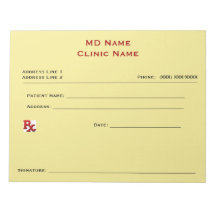


Manual Prescription Pad (Large - Yellow)


Manual Prescription Pad (Large - Pink)

Manual Prescription Pads (Bright Orange)

Manual Prescription Pads (Light Pink)

Manual Prescription Pads (Light Yellow)

Manual Prescription Pad (Large - Blue)

Manual Prescription Pad (Large - White)


VIEW ALL

Grow your healthcare business with an efficient email marketing strategy

Personalized email marketing is an effective, cost efficient strategy to improve patient outcomes, boost your brand, and grow your healthcare business.


The following guidelines will help you develop an effective email marketing plan for your medical practice.


Stay on the right side of HIPAA


First and foremost, be sure to comply with HIPAA rules surrounding marketing to patients. To that end, we have written a detailed explanation of how HIPAA defines marketing and what this means for you.

In a nutshell, covered entities are allowed to market to patients, but in some cases, prior authorization is required, either written or electronic.

In regards to email marketing, most mainstream email marketing platforms will not sign a business associate agreement (BAA), and most of those that do will not allow you to transmit PHI. Make sure you only partner with an email marketing solution which is fully HIPAA compliant.


Build your email list


There are various ways to encourage patients or potential patients to opt-in to receive marketing emails from you. For example, you can include a marketing authorization form in a new patient’s intake paperwork or provide a signup link on your website.

You can also leverage your social media presence to build up your contacts. Your followers on Facebook, Instagram, or Twitter are either current patients or potential patients who want to hear from you. Why not get them on your email list as well?


Tell people what’s in it for them


When people are opting in, mention what your emails will include, whether that’s free guides about preventative care, or simply a monthly healthcare email newsletter.

Making your emails’ value clear increases the likelihood of patients checking the opt-in box.


Segment your email lists


Every email campaign won’t apply to every patient, so tailor messages to the correct audience.

For example, if you’re sending an email to senior citizens, mention how the new pneumonia vaccine could keep them healthy. If you’re sending emails to parents, consider sending information about how they can prevent their children from catching the flu.

Personalization demonstrates that you care about your clients’ well-being, which makes them more comfortable trusting your practice with their healthcare needs.


Personalize your messages


As long as you choose a HIPAA compliant email marketing provider, you can fully personalize your email marketing by including protected health information (PHI) in an email to send pinpointed messages.

As a start, try including someone’s name in the salutation.


Use a pithy subject line


The number of emails sent per day is expected to rise to over 347 billion by 2023. Clearly, your patients’ inboxes are filled with emails, so your subject line needs to stand out.

It is crucial that each campaign contains an interesting subject line, inviting the user to open the email.


Provide a clear, useful message


Make sure that your message is explicit. Clearly explain the intention of your email, such as confirming an appointment or information about what healthcare services your business offers.

Successful email marketing engages readers with content that benefits them. Patients will be more likely to open and read a message that solves their problem or is genuinely useful or interesting.


Get to the point


Your patients are busy people, so they don’t have time to read an email manifesto. Keep your emails short and sweet.

Short messages are also better for mobile. This is hugely important, considering 55% of email is opened on mobile devices.


Send different types of campaigns


Email marketing can take many different forms. An email campaign can provide educational messaging (i.e. summer skincare tips), promotional messaging (i.e. six Botox sessions for the price of five), practice updates (i.e. we’re now offering telehealth), and much more.

Serving up different types of content will keep patients engaged and interested in your emails.


Don’t forget to proofread


Spelling errors and poor grammar reflect poorly on your practice and make it hard for patients to take the message seriously.

Proofread the campaigns you write, but don’t stop there. At least one other set of eyes needs to review them because it can be difficult for you to spot mistakes since you are so close to the content.


Include a call-to-action (CTA)


Nearly one-third of marketers cite email marketing as the digital marketing channel with the highest return on investment (ROI). Take advantage of this by crafting email content that incites patients to take action, such as booking an appointment, or referring a friend.


Conclusion


Email marketing in healthcare is a strong option for nearly every marketing plan. The relative cost is low, the audience is openly receptive, and the rate of return can be exceptionally high.

Medical Practice Supplies


VIEW ALL


Manual Prescription Pad (Large - Yellow)


Manual Prescription Pad (Large - Pink)

Manual Prescription Pads (Bright Orange)

Manual Prescription Pads (Light Pink)

Manual Prescription Pads (Light Yellow)

Manual Prescription Pad (Large - Blue)

Manual Prescription Pad (Large - White)


VIEW ALL

Wednesday, November 11, 2020

20% Off Medical Practice Supplies


20% Off Medical Practice Supplies


VIEW ALL


Manual Prescription Pad (Large - Yellow)
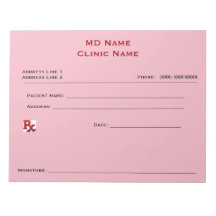

Manual Prescription Pad (Large - Pink)
Manual Prescription Pads (Bright Orange)
Manual Prescription Pads (Light Pink)

Manual Prescription Pads (Light Yellow)
Manual Prescription Pad (Large - Blue)
Manual Prescription Pad (Large - White)


VIEW ALL